Showing posts with label money. Show all posts

13 January, 2024

Retirement planning!

January is turning into quite a social month, as many people have a little more free time before school and many other activities start in a week or so. I’ve struggled to find time to write this week, but do have a post I started before Christmas that didn’t seem quite festive enough at the time. So here it is:

We've been working on longer-term financial planning these last few months. We do short-term financial planning each year as our mission requires us to put together a budget, which gives a set support figure to judge how our support is going. This is a complex, but helpful process that means we're using our resources responsibly, and anticipating future (near) needs as best we can, for example the need to fly to home assignment, or to go to a conference, or buy “new” furniture or a car after home assignment, or replace our aging computer. All these things are budgeted for well in advance. Australia is more expensive than Japan these days, so we budget for our living expenses over several years preceding each home assignment.

We don’t have much of a garden: in
many ways this is a blessing because
it doesn’t take much of our time, so
we’re freed up to devote ourselves to
other things. We do get to enjoy gardens
that other people maintain, though, also 
known as parks!

But as we've both entered our 50s this last term, we decided it would be good to talk to a financial planner about the longer-term future. We wanted an expert's opinion on how are things looking for a retirement in Australia sometime before we hit 70.

Well, we've been very encouraged. We found a Christian who has given us a significant discount for his assistance. And he's given us reassurance that, from what he can see and what he knows, from a worldly perspective, we'll be okay. Of course we have no idea what God will provide, but look forward to seeing that too!

It's at this point that we're very thankful that God led us to be part of a mission organisation that takes long-term member care seriously. And also that we live in a country where financial planning for the future is also taken seriously. So, both of us have had the organisations we've worked for contributing to our superannuation funds (US readers: similar to 401(k)) since we started working in our early 20s, yes, even when we've been working overseas, and these funds are adding up.

This part of life not something missionaries talk about very much. Most people only hear about finance from missionaries when they are in need of more financial support for the immediate future.

But also, in mission circles there is also an understanding that God provides in amazing ways that you can't anticipate. He has been providing for us for the last 23 years, why wouldn't he provide for us in the future, and into retirement too?

It's pretty obvious to us, as we come back each time, that most of our peers are doing things like buying houses, some even getting to the point of finishing paying off their mortgage. We don't own any property. The biggest thing we own is a car. We can't afford to buy real estate in Australia, partly because most of the time we can't live in a house we'd buy in Australia. But we also shy away from the anxieties that arise from owning property in a country where you don't live and from the stress of a mortgage. We've seen the stress that that can cause missionaries (maintenance issues, complex financial affairs that are hard to deal with remotely, tenant issue, etc.).

It’s easy to start to rely on the figures on a spreadsheet though, to trust in that, instead of our Heavenly Father. God has ways of reminding of us of that. But the best thing to do, when we’re distracted by all the dialogue around us (in the media as well as in conversation with friends) about real estate, mortgages, money, banks, stuff to buy, etc, is to go back to God’s word. One of the places Jesus directly addressed these things is in Matthew 6 where he said:

So do not worry, saying, “What shall we eat?” or “What shall we drink?” or “What shall we wear?”  For the pagans run after all these things, and your heavenly Father knows that you need them.  But seek first his kingdom and his righteousness, and all these things will be given to you as well.  Therefore do not worry about tomorrow, for tomorrow will worry about itself. Each day has enough trouble of its own.

We’re grateful we don’t have much stuff to take up a lot of our time to maintain, but it’s in the mental zone that we need to fight the battle not to worry (at least it is for me).

14 December, 2020

Festive Fudge Fundraiser!

Last week on social media I posted about one of the things I love to do at Christmas time: make chocolate fudge and give it to each of our boys' teachers. As an aside I pondered what I would do after our youngest has left school (only two more Christmases after this one until that happens). A few people comments that they'd happily receive fudge from us! 

That got me thinking . . . maybe I could sell them. Then, while walking together last Wednesday night, David commented that a couple of other people we know in the school community are using their skills at making things to raise money for the current fundraiser at school Impact 75 to raise money for an artificial turf field at school (it's currently gravel).

So I impulsively decided to set up our own mini fundraiser by volunteering to make fudge for anyone who could pick them up from us or from school, and pay 100 yen a piece. So far we've sold 100 pieces! I made 3.5 kg of fudge on the weekend and David cut them up, packaged them, and has delivered them this morning to (mostly) staff at school.

It's been a fun venture (and diversion), but I don't think I'll be going into commercial cookery anytime soon. Too much pressure to make things "perfect" and "regular". David had quite a bit of fun trying to cut the pieces into as regular sizes as he could.

David working with the fudge pieces and scales.
His cutting wasn't as accurate as he'd hoped!

If there's anyone else in the local community who'd like to buy fudge from us, I can make 30 more pieces. Please put your order in here by Tuesday 5pm: Fudge fundraiser. It needs to be picked up at school on Wednesday or from us by Thursday night because we go away on holidays on Friday.

18 January, 2018

Relatively pricey

When we first came to Japan in 2000 it was a significantly more expensive place to live compared to Australia. Since then prices haven't changed dramatically in Japan, but they have in Australia. 

Living away from Australia for large chunks of time puts the changes there into something like a time-capsule for us. When we return we notice the changes there more dramatically than those who have experienced them in small increments.

This last time we lived there (2014/15) we especially noticed how expensive going out to eat was compared to Japan. The fact that we now have much bigger boys who are much more hungry, doesn't help. But in Japan we can feed them a reasonable-size meal, not too unhealthy meal at a family-style restaurant for under 1,000 yen (or just over $11). I doubt that's possible in most places in Australia.

This article that the ABC published this week confirms what we know from experience: 
"So Australians have become richer, but Australia has become much more expensive. Japan has seen its income rise by far less, but prices haven't moved much at all."
So when we return in July, part of re-entry experience will be figuring out what a "good price" for common products are, as well as getting used to the fact that things just cost more. 

Yikes. I'm looking forward to shopping, yet I'm not looking forward to it either!

08 November, 2017

Personal seal

One of the first things we owned in Japan:
a family seal.
Did you know that we rarely sign things in Japan? In fact I usually have to practise my signature a couple of times when returning to Australia because I'm quite rusty. Part of the reason I don't use my signature much here is that I pay cash for pretty much everything on a day-to-day basis. I almost never pull out a card to pay for something unless I'm buying it online. The other reason is that signatures are a relatively new phenomenon in Japan. Most often official things are "signed" using a personal seal.
It says: Marshall (literally maasharu)
Last week our eldest son had to open a Japanese bank account for taxation purposes. He needed a personal seal to open the account. At first we thought that he needed his own, but it turns out that it was okay for him to use our family seal or inkan. It actually turns out that he probably didn't need a seal at all, a friend told me her Australian husband has never had one and he's employed in a firm here in Tokyo. He does it all, as he would in Australia, with a signature.
Come to think of it, now, when we take delivery of postal items, they usually ask for a signature, not a stamp. Ha, there's always things to learn when you're living in another country. It feels like you're forever playing catch-up.


We were pondering this "seal" culture when I was with my language exchange friends last week. It turns out that Japan isn't the only country that still uses them. To me it seems to be a throw-back to ancient times when important people sealed things with wax, but China, Taiwan, Korea, and Vietnam also still use seals to one degree or another (see here).

Anyway, I'd asked one of my language exchange friends about having an inkan made for our son as she owns a stationary store and customers can order inkans through them. She brought a catalogue to show us that you can see here. I had no idea there were so many choices, nor that most people own more than one. There are choices in size, style, and even the material they're made from (from cheap resin and box tree to expensive ivory). 
In the close-up picture below you can see differences in size and style (not sure why the abbreviation for millimetre is rendered m/m). The one on the right is for formal documents for something like a company and there is no up or down (which is important in the ones on the left).


There is a more informative article about this topic here.


05 November, 2017

Coffee comparison

I haven't done much price comparison here before (once in 2011), but this one particularly intrigues me.

This article looks at coffee prices in various popular coffee chains in Japan. The graph they present is prices of "regular-sized straight coffees" (whatever that is). The prices range from 190 yen for a cup (AU$2.18) to 580 yen (AU$6.64). Though I suspect that the more expensive the coffees were, the smaller the cups were!

I've sampled coffee at several of the cafes featured and my preference is for those in the upper middle range. Those coffees are around 300 yen (AU$3.44). Although I usually buy the more expensive cafe latte. A "tall" cafe latte at Tullys is 410 yen. If Wikipedia is correct about Tullys in Japan, that is a 350ml cup.

My curiosity is about Australian coffee shops. How do the prices compare? How much do you pay for a regular-sized straight coffee in Australia? (And what is that anyway, in Australian coffee-terms, a short black?)

My other question is related to coffee, but not this the price so much. I prefer my coffee in a mug. And am annoyed that Starbucks just uses disposable cups (not that I go there often). But I am interested in the idea of using my own. I believe that you get a small discount in some places when you do that. I haven't tried it yet (I've only got my somewhat dowdy camping travel mug). I'm wondering if I did, what sort of travel mug I should get and what size? But again, I prefer a ceramic mug to drink my coffee out of . . . it's not quite the same out of a plastic container.

Back to my original question: I'm interested in hearing, what the current cost of cafe coffee is in Australia!

15 June, 2017

Share my world #3

Camping and photography combined last summer!
Taken at sunrise at Lake Biwa.
I slipped off the wagon with this one. It's been a month since I last responded to the prompt. Here are this week's questions and answers:

What do you do when you’re not working?
I could write an essay on this, but my simple answer is: Read, watch DVD episodes, play word or card or other simple games on my phone, crafting, coffee with friends, riding my bike, photography, camping.
What would you do if you won the lottery?
I don't play the lottery, but if someone gave me a significant amount of money above and beyond what we needed, I might buy my first house or apartment in Australia. I'd probably also use some to support other missionaries.
What makes you laugh the most?
Yikes, that's hard. Possibly irony?
What is your biggest pet peeve with modern technology?
That I don't understand it well enough to fearlessly fix it myself when things go wrong with something like email that I use on a daily basis for my work.
Optional Bonus question:  What are you grateful for from last week, and what are you looking forward to in the week coming up?

I'm grateful that the regular school year has finished for everyone now. 
I'm doing something unusual on Sunday, taking a couple of friends to visit a church plant run by OMF colleagues in Yokohama.

This prompt comes from Cee's Photography blog. 

12 January, 2017

A bit chilly in Tokyo

Here is another topic that hits missionary's budgets: heating. I wrote a more detailed blog post about this some time ago, that you can find here.

For today I thought I'd show you what I did this morning, in my dressing gown, in our backyard. 

I'd just taken the second photo of the low outside temperature from inside when I discovered our kerosene heater downstairs (our main source of heat during the day) had run out of fuel. So I popped out the "back door" and filled up the metal tank from one of our two portable kerosene tanks using a simple hand-operated siphoning pump.

I'm glad we now do this out the back, previously we used to have to go out the front (practically onto the road) and squeeze down the side of the carport between bikes and the dusty car to where we stored the kerosene. Not something you do in your dressing gown and fluffy PJs at 8.15am on a school day!

We use kerosene rather than air conditioning or gas because it is the cheapest way to heat here. We do have three electric heaters upstairs (bathroom and boy-bedrooms), but they are only used for short periods when people are using those rooms. Kerosene is a common way that Japanese people heat their houses.

But yes, things are a bit chilly around here, a normal Tokyo winter. I've become aware that I could be storing most of the food from my fridge in the stairwell/entry way. The temperature there hasn't gone above 10C for a while. It's not as cold as many parts of Japan north of here (and up in the mountains), but as we've got poor insulation in our house (including a number of large windows) and no central heating, it's cold enough for me.

These days David and I are sleeping with our electric blanket on low and with beanies and two bankets and a thick doona (duvet/comforter/Continental quilt). I've also added a soft neck warmer in recent days to help with the muscle tightness I struggle with. My boys laugh.


04 May, 2016

US cheque challenge

Last week I learned something new about American cheques, via comments on my FB page about how Americans vs Australians say numbers in their hundreds (Australians and some Americans add an "and" between the hundreds and tens or less, some Americans don't). The new thing is that when they write out the amount in full, they use fractions for the cents. Not "fifty-five dollars and sixty cents" but "fifty-five dollars and 55/100 dollars"!


And behold, an American cheque arrived on in my mailbox on Monday! That is a rare occurrence. Actually I can't remember last time we received a cheque in Japan. It's a problem, because Japanese don't use personal cheques and banks don't like to accept them. They charge a large processing fee (this webpage suggests about 1,000 yen or about US$9.30). When it is just a US$20 dollar cheque it just isn't worth it.

There were more complications about this cheque. It is for a meditation that I wrote and submitted two years ago, April 2014! But it wasn't the first place I'd submitted this mediation to. I sent it to another organisation in January, four months earlier and not heard from them. That group has published my writing before and generally if you haven't heard from them after a couple of months you can be sure that they've not accepted your submission. However I jumped the gun this time. In June, two months after submitting a slightly rewritten meditation to the second group, the original organisation wrote to me and said they might publish it!

I'll save you the gory details, suffice to say that both organisations have or will publish my meditation this calendar year! One in February, the other in the northern hemisphere's "Fall".

That might not seem to be a problem initially, if you're not a writer, especially as both organisations pay for published work. However there are rights issues here. There is such a thing as "first rights" and it means that the work they are publishing hasn't been previously published elsewhere. Both groups assumed that this was the first time this piece had been published. Not unreasonably as that is the condition on which you submit. However things had gotten a bit knotty.

So yesterday I looked at what I submitted again to see whether the rewrite I did in April 2014 was sufficiently changed to allow it to qualify as a "first write" and it wasn't, they are clearly the same article, with a few changes in wording here and there. Then I wrote to the publishing group telling them what had happened and that I didn't think I could accept payment from them.

They wrote back promptly telling me not to worry, that the material was at the printer already and that they'd still pay me for first rights. We came to a compromise on the cheque too, I have to post it back and they'll pay me via the US branch of our mission, who can accept US cheques. I'm thankful for their forgiving attitude towards my mistake. But so far in my writing career I've earned less than $100 over the last five years . . . I don't think I'll going full-time as a writer anytime soon.

Admittedly the only "mission" related thing here is the cheque problem. I could easily have had the same problem from Australia. 

This whole thing is a bit of a challenge for a writer, though. This organisation says that they'll let you know in two to three months if they aren't going to use your work (opposite to the other group), but I received a rejection from them in February for another piece I submitted to them, 22 months after I submitted it! Obviously I need to be a little less trigger-happy with my re-submission of article. Or perhaps a little more vigorous in rewrites?


20 February, 2016

Sources of free photos

I just downloaded this from https://stocksnap.io. It will be me
tomorrow as I catch trains across Tokyo and then fly
to Bangkok. (But my suitcase isn't red!)
Most people know that you can't just download photos off the internet and use them for your own use. Unless they are stated as free-for-use, it is stealing.

This becomes an even bigger issue when you're trying to put a magazine together on a tight budget and without a photographer on-staff. You need good quality photos that you don't necessarily get from the authors of articles.

One of our designers found this post which gives links to websites with free stock photos. Very useful! I used a beautiful one for our Christmas card. Other uses include websites, blogs, slide presentations, backgrounds for songs for worship on Sunday etc.

01 December, 2015

Permission to spend?

I found a blog post last month that aired some taboo topics. It's covers areas that most missionaries secretly struggle with.
These permissions are areas other people
struggle with too. For example, my brother-in-law
is a farmer and he needs permission to rest. Our
camping trip at Easter with him and his family was
such a time when he felt able to rest. It was fabulous.

(This post) might reduce the pressure that becomes toxic to missionaries. Sometimes that pressure is self-inflicted—derived from the unachievable standards they levy on themselves. And sometimes it’s imposed by supporters and churches who mean well, but fail to measure the human toll of a life in ministry. 
So the onus of responsibility is twofold: on the missionaries who self-blame and self-shame and on the networks that back them, sometimes piling unreasonable expectations on people who work in circumstances they can’t fully fathom.
The author encourages missionaries to accept permission to: 
  • be confused (about things like support, why the work seems to bear little fruit)
  • be flawed
  • rest 
  • spend (this is one that I struggle with deeply)
  • quit (haven't gone here yet, but the concept that God may call you somewhere else, even back to your passport country)
You really need to go and read the article for yourself: http://www.oscar.org.uk/oscaractive/articles/phoenix.htm

04 October, 2015

Is Japan expensive?

Average rent in Tokyo for a 3LDK^ is 162,000 yen per month, or just under AU$1,700 per month. Our house is technically a 4LDK, but it is old and the rent we pay is less than the
This is our house (the green/blue coloured
roof) with our car in the carport.
average stated above. The average for the same size accommodation in the whole country is 88,000 yen (about AU$920). We pay more than this, but it's understood that property costs make doing mission in Tokyo expensive.*


This is the living expense in Japan that is way higher for us. Groceries aren't much different to Australia. Australia has caught up to Japan in this area, when we first moved to Japan there was a large difference in grocery expenses, but not any more.


^Here is a decoder for the abbreviations above (they are standard for real estate here): 
“D” stands for “dining” and “K” stands for “kitchen”. A 1K is an apartment with a main room and a kitchen that may be separated from the main room by a wall, but sometimes is not. A 1DK has a main room, with a dining area and a kitchen (which again, may not be separated by a wall).

“L” stands for “living”. A 1LDK apartment has a living room, dining area, kitchen and one additional room; 1LDKs are bigger than 1Rs/1Ks/1DKs. 
The number in front of the K or DK stands for the additional number of rooms, so a 2K has two rooms and a kitchen. A 2DK has two rooms plus a dining area and kitchen. A 2DK apartment in Tokyo is typically about 40 square meters, but this can vary.

*Source: http://resources.realestate.co.jp/report/average-rent-in-japan-by-prefecture/

31 August, 2015

35 yen margin

I was saved by only 35 yen today (about 40 cents). It's something that catches me every time I come back after an extended time in Australia.


Japan is a cash society. So all my daily transactions are in cash. I've never tried to pay for groceries with a plastic card, whereas in Australia I do that all the time. It's not unusual to carry more than 10,000 yen of cash (AUD$115) in my purse. 

I paid for 250 yen for coffee this afternoon with a 10,000 yen note! No problem.

But this morning I nearly ran out of cash in my purse. I stopped at three different shops for groceries this morning (hunting for capsicum), my last stop was our usual grocery store and the total of my bill was 35 yen under what I had on me. Phew! 

It wouldn't have been the first time that I'd run out of cash at that store. It's always embarrassing! (Here's a story from last time we came back, a double embarrassment that time as I went into the wrong house and called for my husband and his wallet.)

Another cash difference here is that not only do they not blink if you give them a large denomination note for a small purchase. Neither do they appear to mind if you root around for the exact change. It is easy to end up with too many one and five yen coins, so I usually try to use them as often as I can, even if it is, say a 2,543 yen purchase, I might give them 3 x 1,000 in notes, plus 3 yen, or 43 yen if I had it. No problem. I don't do this so often in Australia. But of course we don't have any one or two cent coins in Australia, so this isn't so much an issue.

It's always an adjustment to go either way. Going back to Australia I need to remember my pin number and how to sign my name! Lots of fun, keeping me on my toes.

05 February, 2015

The importance of support workers in mission

During the Falkland War (1982) the Argentinean military leaders placed many Argentinean soldiers on the Falkland Islands to occupy them. These soldiers were not very well trained and poorly equipped. They also did not receive the logistical backup an operation of that nature required.

The Islands legally belonged to Great Britain, who sent troops to the Islands to re-occupy them. The British soldiers were well trained and although the Islands were thousands of kilometres from Great Britain, the British Navy supplied remarkably good logistical support. The British soldiers’ moral was also much better than the Argentineans’. Although totally outnumbered by the Argentineans, the British were able to overrun the Argentinean defences within weeks, with great loss of life on the side of the Argentineans.

After the war the Argentinean president and two members of his military government were brought to trial and found guilty of negligence during the war. They were sentenced to 12 years imprisonment each.1

True story!

But how is it relevant to this blog? 

Somehow an imaginary line has been drawn in people's minds between "real, front-line missionaries" and "support missionaries". Our mission actually has no such categories, thankfully.


One of the things I've done as a support missionary is to
 help other missionaries be better writers so
they can communicate their unique stories.
A blog post appeared recently in my Facebook feed called, "In Praise of Mission Support Workers". It is written by an OMF church planter in Thailand. He wrote that he hates the question: “How much [finance] goes to admin?” I have to admit that I've never been asked that question and I'm glad. 

First I don't have a figure to give. 
Second, it implies that money not used directly in evangelism and church planting is wasted money. 
Third, I am a support missionary. 95% of what I do is supporting other missionaries, so what is a question like that saying about me and my ministries?

Modern military forces would never send their armies out without support. They need a lot of infrastructure to be effective. People who aren't on the "front line". The same principle apply to mission.

The above author successfully points out that he can't do his ministry and do all the things that are needed to support his ministry (including admin related to donations, visas), nor is he capable to do things that are necessary to keep missionaries on the field (like medical advice, teaching their kids, supervising language students).


1. Zakheim, D.S. (1985) The South Atlantic Conflict: Strategic, Military, and Techonological Lessons. In Coll, A.R. &; Arend, A.C. (eds.) The Falklands War: Lessons for Strategy, Diplomacy, and International Law. Allen & Unwin, Inc, USA.) pp 177 & 179.


23 January, 2015

Lots of discussion about fashion and missionaries

I had a lot of comments on my Facebook page as a result of yesterday's post about missionaries and fashion. I thought that I'd post some of the comments (names removed for privacy) here for those of you who don't know me personally.
Here is me before Christmas in one of my very
comfortable t-shirts!


C: I think that anything that makes you feel good about yourself and confident will only enhance your inner as well as your outer beauty. Why on earth should you look dowdy or old fashioned just because you're a missionary? Modest, yes, but that's not limited to missionaries ;)  Love the earrings, have fun with them!

Me:  I think that there is an unspoken thing is that missionaries aren't supposed to be worldly, aren't supposed to spend money on themselves. Misguided really. 

MJ: Isn't it part of a bigger tension that we face in a whole lot more areas than this? On the one hand, we need to be enough like the people we're working with (homeside or fieldside) that they can relate to us, but different enough that it shows our identity and value doesn't reside in our clothes (or house, gizmos, food etc.) and challenges others so see life the same way. Hence there's no easy answer. 

Me: Yes indeed MJ.

C: I'm (as a non-missionary and a really quite slack Easter and Christmas churchgoer) interested to know where the ?judgement? comes from? Other missionaries? People in the congregation? I realise that judgment probably isn't the right word, but I can't think of another. Also, not meaning to be inflammatory or insulting - it's a genuine question. And I honestly believe that it's a compliment to God to want to look your best, most well-presented self as you spread the word.

JL: Sometimes it can be self judgement/ self assessment too.

C I hadn't thought of that. I'm finding this a fascinating discussion.

MePeople give money for us to do this, if we report back to them (which is essentially what we're doing in Australia) and we're wearing expensive clothes, say with an expensive car, people will question how we're using our money, presumably.

Me: MJ, I wonder whether the essence is conducting our lives in all aspects so that we aren't a stumbling block to others understanding our message?

MJThat's the theory. It's the putting into practice part that lacks easy answers!

MJ: C, 'Judgement' is as you say, not a great word for it - I think it implies a more conscious process than I think is really at work. It's a recognition that, if you come across as too weird, people tend to discount what you say as weird without getting as far as listening to the content. But we also need to lead a life in accordance with what we believe - that material things such as clothes are not ultimately hugely important in themselves. Sometimes they are important in being respectful to those we appear in front of (as Wendy says, especially in Japan!)

MB: Just a thought because this makes my blood boil!....the people who support missionaries/pastors/ect financially should give without any expectations on what you can or cannot do with your money, its nobody else's business what you awesome people who give up so much for the sake of the call do with your money.....in fact you should be given more and blessed far and above because you sacrifice so much!

C: MB, I've been trying to word the exact same sentiments! Personal finances are private, regardless of where they come from. I would never expect my boss (hypothetically, as I'm a stay at home mum) to voice an opinion on how I spend my pay - why should missionaries have to justify their spending?

CAnd I don't understand why feeling good about your external appearance and serving God would have to be mutually exclusive? By the way, I'm no fashionista! I shop mainly at Target, I'm a champion bargain hunter and I'm stuck in a fashion rut - however, I know how much more confident I am when I feel good about how I look.

MeMaybe I'm being too sensitive, but I think it is an issue that missionaries do think about. I have heard criticism from supporters about one missionary couple and how often they visit Australia. I don't know how often supporters think this way, though.

MB: I like the way you think C! they shouldn't have to justify their spending and anyone who thinks they should....well like I said it makes my blood boil!

KKLove reading all of these comments. I use to be involved in a church not mentioning any names and one of the missionary we use to support only wore name brand clothes. But yes. Who really cares what you wear. God knows your heart and you will be rewarded with beauty up in heaven. By the way you can get well known brand names at the op shop. 

Former missionary: One thing I found was that I didn't want to stand out as different when I came home. I'd had 4 years of that. I feel we need to be comfortable but not extravagant.

JI think it's about comfort, but that includes being comfortable with the people you're with, as well as comfortable clothes. Coco Chanel used to say to buy the best because it would never date, and fashion is notorious for being SO fleeting. Stick to what you like, don't worry about what people think. If you like it, you'll look better than if you try to push yourself into the mould of what you think people expect. (Not that I can see you doing too much of that anyway!)

 I had lunch today with one of the above friends and she confirmed for me that this is a problem for ministers too. Not just that people are judging them, but that some feel bound to make decisions about material things that will minimise the judgement.

We reflected on how sad it is that Christians can be so judgemental.

What was encouraging was her reassurance, as one of our supporters, is that she doesn't care what we do with the money that she gives us.

07 August, 2014

Culture shock–grocery shopping

It is common for missionaries to talk about the re-entry culture shock of grocery shopping. Japan to Australia isn't as bad as from a country like the Philippines. Check out this missionary's photo comparisons:
http://www.djiboutijones.com/2014/08/culture-shock-in-pictures-grocery-shopping/
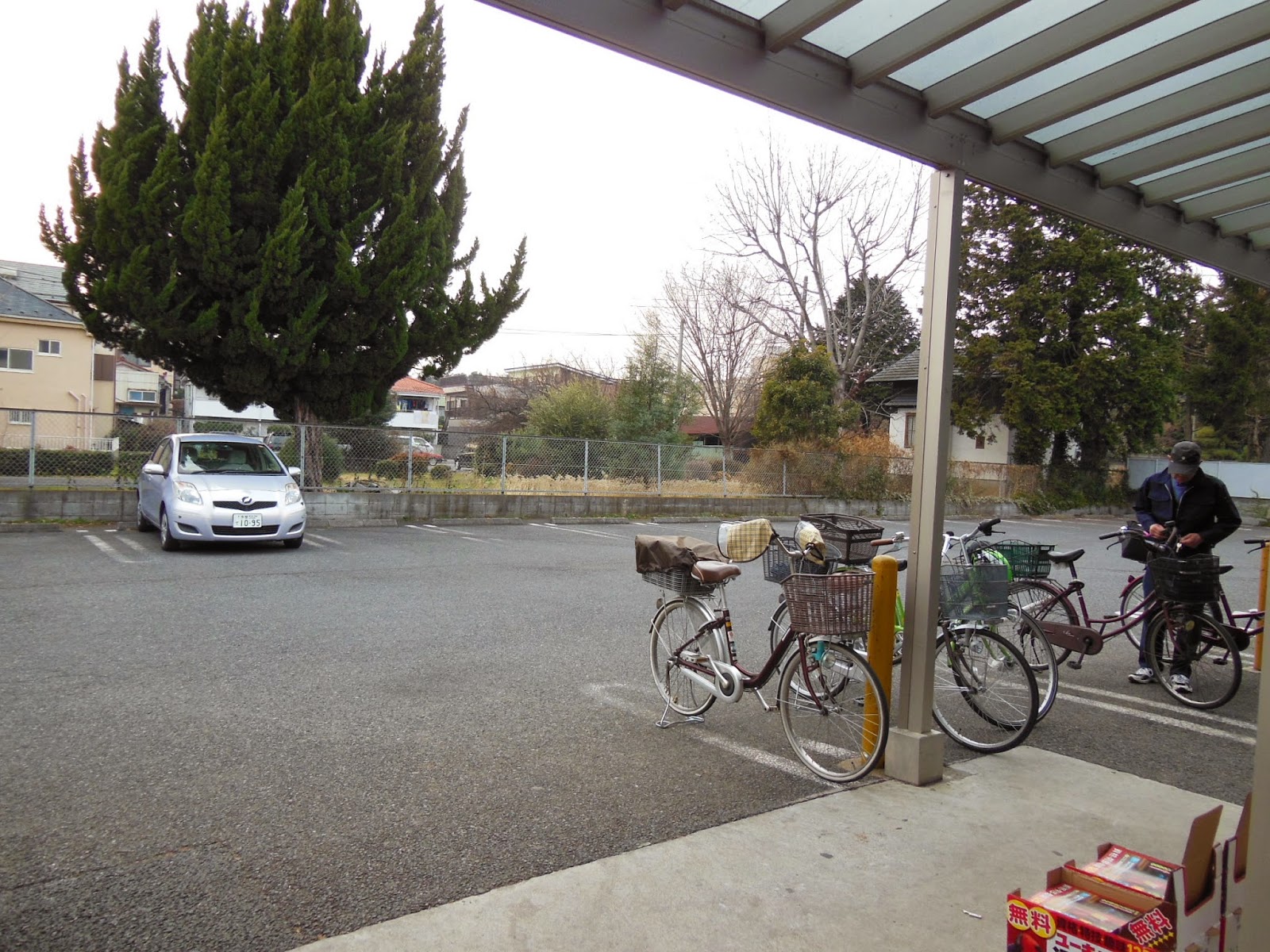
This is one of the stores I regularly shop at in Japan. There
are usually more bikes than cars in the "car"park.

Our experience isn't quite as stark, but it still is a challenge. To go from almost no choice on some things to large amounts of choice is hard. 


What makes it harder is that you actually "want it all". When we're in Japan there is food we miss. There is food we dream about. Choices we wish we had. Then, all of a sudden, we are presented with all the possibilities of our dreams. It is tempting to buy it all.

Then there is the financial challenge on a couple of fronts.
1. We're used to how much things cost in Japan, especially most groceries. We know what a good deal is and when something is too dear. We don't know that anymore in Australia. Not only are we not used to dealing with Australian currency any more, prices have changed while we were away. It is no longer clear what is a good price.
There are four aisles this long, way smaller than
a large supermarket in Australia. But then, they
don't stock everything I want. But they do have all
the regular things I need, so I'm happy.
The shopping trolleys are small too.

2. There are a lot of set-up costs involved in moving country. We had a lot of help  in setting up the large items in our house, and I mean stacks, to the point that we now have two microwaves, two vacuum cleaners, three printers, and seven mattresses in our house. Despite this we found ourselves reeling a little under the various other things that we needed to purchase, including school uniforms and books. Setting up the pantry has been an expensive deal too, even though I'm a cautious buyer. It's been important to me, because I know that a well set-up pantry will save us money in the long run. This is especially as I look at prices for take-away and restaurant meals in Australia and realise that feeding my hungry family of boys will really eat into our budget, if we rely on take-away meals too often.

Some people suggested early on that to deal with the stress of grocery stores I should go to smaller ones with less choice. Unfortunately those smaller stores are usually more expensive, which would have exacerbated the financial stress I was already feeling.

I'm not writing this to complain. We have enough. We have a lot more than some people in this country! I am very thankful. But I'm writing this as a portion of what my lengthy answer would be to the question: "How are you settling?"

14 December, 2013

Are you paid to do that?

My 8 y.o. asked me this the other day about my editing work. My first response was, "No."

But when I stopped for a second and thought about it I changed my answer to, "In a way, yes."

It was similar to an awkward question that a visitor from Australia asked recently. He asked, "Wendy, do you have a job...um, I mean, do you work outside the house, um, I mean not to say that being a stay at home mum..." 

Well, I put him out of his agony and said that I do indeed, "have a job that is beyond taking care of my family, but for the most part I do it from 'inside my home'. 

Other things intervened here and I wasn't able to give a more extended answer, however if I could, I would have explained that it is not a "paid job" as in no one from JEMA pays me to edit the magazine. No one from OMF pays me to head up the 31 Days of Prayer for Japan, project.

Being a missionary is a strange career when you compare it to most people's work. We're basically professional volunteers. We aren't living off our savings or an inheritance. But we aren't paid by an employer either, instead our needs are supplied by people and groups who choose to be a part of our story. Those people don't require us to submit time sheets,
This was taken at the very start of this overseas
adventure in 2000. Don't we look young!
or produce a tangible result for their contributions.


Our mission leaders do hold us to certain standards, standards that include pretty personal reviews (see here). They "pay" us, as in they handle the money that is given to support us and they put it into our bank account. The organisation is pretty useful financially-wise, actually. Most of that money is given in Aussie dollars, but we're paid in Japanese yen. Because our organisation is international, I believe we save a lot of money in international bank transfers (but don't ask me to explain that!)

The other big expectation of our mission is that we report back to our supporters. Not with a time card, or a written report, or a financial returns statement, but in person. That is what our home assignment is partly for: to reconnect with all those people who choose to "pay" us for what we do.

Of course the explanation here gets tricky. About half of our "support" comes from David's job as a teacher. A regular job where he has regular hours and regular employer's expectations upon him. That money gets paid to OMF and not directly to us, however.

So, anything I do as a missionary is on the one hand as a "volunteer" but on the other hand it is "paid". It's a tricky question! I don't get paid by the hour for the editing work I do, nor do I have a contract. But I wouldn't be able to do it except for the people who give so that we can be here (otherwise I'd have to have a job with an employer who did expect me to fill out time cards).

Such a great job to have! I really wouldn't like to exchange it for a regular job.

09 September, 2012

Look at your missionary with a critical eye?

Recently I read a blog post  by a former missionary-in-Japan about judging. About the areas about which people tend to judge missionaries:

"How we spend our time, how we spend our money, and how we raise our children." 


It does help to explain why missionaries are often very careful about what they disclose in prayer letters (like talking about holidays).

You can read it here. She talks about what unconscious assumptions we might have, but also gives some helpful, Biblical ways to respond to our critical hearts. It is both a challenging and helpful post.