Showing posts with label culture shock. Show all posts

26 August, 2023

Transplant shock

A close friend has watched me struggle this week. Struggle with work not going as expected, with criticism, with ups and downs; struggle with expectations of our kids, of ourselves, and “the system”, with impatience and frustration, and with a poor sense of time passing. She’s watched and prayed as my emotions soured and bottomed out. And she’s pondered the analogy of “transplant shock”.

Transplant shock is something that can happen when a plant is transplanted from one pot to another, or from one “in ground” location to another. My limited research tells me it can last a couple of weeks, or, in the case of larger plants like trees, a couple of years. It’s got to do with how well the roots are able to absorb water and nutrients from the soil. There are various things you can do to prevent it, or to help a plant recover from it, but patience is also needed.

We finally put up some pictures on the wall
this week, I was longing to see this old
favourite: my preserved wedding bouquet!
But I commented to a couple of friends
that my bedroom looked more settled than
I felt!

Now I don’t want to take the analogy too far. But it’s helpful to think about, especially as we get impatient with ourselves and those around us. We’ve had a very large transition and it’s going to take time, probably more time than we (and others) realise, to recover. Of course we want to feel settled as fast as possible, especially because this isn’t a once only transition, we anticipate we’ll be here only a year and then another transition will happen. Somehow we humans are programmed to try to avoid pain. But being impatient and frustrated with it all will probably only make things worse.

How do I know if a plant is suffering from transplant shock? Withered or drooping leaves, fruit or leaves abruptly dropping, dying branches, easily bruised.

How do I know that I am still suffering from transplant shock? Quickly wearied, easily knocked “off balance”. A poor sense of time passing (it seems like a long time since last Friday, for example). Memory issues, poor concentration. I’m sometimes homesick for familiar routines and a familiar environment, sometimes dominating a conversation with memories from Japan. Emotional, tears are falling more easily at the moment.

That’s enough of a list, I think.

The cure? Lots of common sense stuff: eat well, exercise, rest, and sleep. Being patient. And keeping a good longer-term perspective. As a Christian, keeping my eyes on Jesus, on my rock. Plus, being thankful for all that we’ve achieved with God’s help so far in this transition (which actually is quite a lot). And perhaps taking the ups and downs a little less seriously?

Do you have any other suggestions?

15 August, 2023

Culture shock: it can bite you in your passport country too

Maybe you're wondering if I've had a hard time re-entering into Australia, in terms of culture shock. On Saturday we attended a half-day gathering held by our organisation for people in our state interested in mission. It was very full-on. But it was part-reunion—many of the people there have known us since we went to Indonesia as young adults in 1993). There were also fellow cross-cultural workers that we'd heard of, but never met. There was one missionary couple whose lives have paralleled ours in many ways: we left for Asia in the same year, but our lives have rarely cross as we've worked in different countries and come back to Australia at different times.

Someone on Saturday asked if I'd had re-entry shock. But it wasn't easy to come up with many instances of significant shock. Perhaps because I'd been back last year for a couple of months?

I have to say it's been pleasant to be free from the social pressure surrounding masks in Japan, though that had diminished significantly in the last couple of months. 

It has been a little bit of surprise to see signs everywhere in shops and other public service areas telling Australians that there is “zero tolerance of bad behaviour”. In general Australians seem to be conforming to the signs. From what I've heard, though, teachers would be hoping similar signs could be posted in their classrooms! It's really a pity that any signs are needed at all, anywhere! But it did get me thinking about how I'm used to the Japanese value of being considerate of others. It's one of those things that makes foreigners think Japan is such an amazing place (think about the press they've gotten for tidying up stands after big games).

Our street is really quiet, far quieter than you would believe possible, considering there are some really busy roads very close by. However, sometimes we’ve had loud music (during the day so far only). There was a guy building a wall across the street for several days, and he usually played loud music. Then one day last week a neighbour played very loud music mid-morning for an hour or two, loud enough for me to want to keep the doors shut. I can’t work well with non-instrumental music in the background and this music was intrusive. 

These major road works are happening only about 
300m from our house. We don’t hear them. 

Culture shock: this type of thing rarely happens in Japan. People are generally very cautious about doing anything that will cause discomfort to others. Japanese tradies, or others working on people’s houses never seem to play loud music while they work.

The only loud music we encountered at home during the last decade or so was from the kindergarten just down the road. They played it outside occasionally for the kids to perform to, or during sports events. The nearby elementary school did similarly, but less often. Occasionally we’d hear pianos, but never loud recorded music.

It’s this sort of thing (first considering how your actions will affect others, and being very concerned about what others think of you) that marks Japan as much more group orientated than Australia.

Yesterday we went to one of Brisbane's largest shopping centres to meet with our organisation's national director and another worker from Japan who is also on home assignment. As we walked from the car park to the place we were meeting, we travelled on escalators and I briefly wondered if I should adhere to the "stand on left, walk on right" rule that is standard on Tokyo escalators. The difference between the two countries is that if I break an understood rule here in Australia, I'm more likely to be yelled at. That kind of direct confrontation is much less common in Japan, though I have been told off in a train before: for talking too loudly. Last year in Tokyo I was told off in my local grocery store for coughing (into my mask), and no, I wasn't out while sick, I had asthma post-cold.

When you consider that we left Australia in 2000 our late 20s and have only been here for a total of less than four years in the last 22 ½ years, you'd expect that we'd experience some shock. But I guess we've been back every now and then during that period, so have somewhat recalibrated each time. Thankfully I've been spared any dramatic instances of re-entry culture shock so far this year. The difficult thing about it, though, is that it can sneak up on you in the most unexpected moments and really throw you. When that happens you can suddenly feel very disorientated and shaky, especially if it happens in a situation where an immediate response is required by someone who doesn't know anything about you.

01 April, 2018

Ugly is okay?

There were two Australians and an American at a missionary conference in Japan. The American had been in Japan many less years than either Australian.


In a casual conversation, one Australian mentioned their son in passing, using the word "ugly" as a descriptor.

The North American was shocked and said so.

The other Australian pointed out that the comment was a beautiful example of contextualisation: that a Japanese person would naturally say such a thing about their child.

There was a pause in conversation as they considered that.
_______________

Of course the Australian was, perhaps, not being as Japanese in their comment as their colleague suggested (although after a lengthy period of living in this country, the ways of this country do rub off on you). For in Australia such a comment is just a bit of lighthearted tomfoolery. In Japan, a parent might say something like this out of humility. And, well, for an American, it was all rather a shock.

It's easy make assumptions or mistakes when you're dealing with multiple cultures, even between native English speakers.

Please don't assume you know who is who in this scenario!

18 January, 2018

Relatively pricey

When we first came to Japan in 2000 it was a significantly more expensive place to live compared to Australia. Since then prices haven't changed dramatically in Japan, but they have in Australia. 

Living away from Australia for large chunks of time puts the changes there into something like a time-capsule for us. When we return we notice the changes there more dramatically than those who have experienced them in small increments.

This last time we lived there (2014/15) we especially noticed how expensive going out to eat was compared to Japan. The fact that we now have much bigger boys who are much more hungry, doesn't help. But in Japan we can feed them a reasonable-size meal, not too unhealthy meal at a family-style restaurant for under 1,000 yen (or just over $11). I doubt that's possible in most places in Australia.

This article that the ABC published this week confirms what we know from experience: 
"So Australians have become richer, but Australia has become much more expensive. Japan has seen its income rise by far less, but prices haven't moved much at all."
So when we return in July, part of re-entry experience will be figuring out what a "good price" for common products are, as well as getting used to the fact that things just cost more. 

Yikes. I'm looking forward to shopping, yet I'm not looking forward to it either!

16 October, 2016

Acute culture shock

 
Every week we put out at least this much
clean plastic, most of it wrappers off
food. It's great that this seems to be
"recyclable" rubbish, but prevention
would be better! Part of the problem is
that portion sizes are small, so we get
through so many small packages being
a family with big appetites.
A few days ago I came across a blog post by young American lady who has been in Japan only a couple of months. She's suffering from acute culture shock. Lots about Japan is strange and abhorrent to her (she's also promised a blog post about the things that she loves about Japan, I can't wait to see that). We still struggle with some of the things she mentions but generally we've gotten used to them or have found ways around them. 

But it's nearly 16 years since we first arrived in Japan and it's hard to remember how strong those feelings were at the beginning. Of course we as a missionary couple with a young child we had different stresses, but we also probably had more support around us than perhaps this lady has. My biggest impression of the first 2 ½ months of life in this country was cold and snow: we arrived in Sapporo in December! One of the snowiest cities in the world.

But part of me wishes I could get alongside this girl and help her with some of her concerns, like finding water fountains and trashcans. All are available, she's just not finding them. I'm not sure where she is shopping, because she's having trouble finding cheese and decently priced fruit and vegetables. She just needs a few pointers and a bit of encouragement.

Other things she's concerned about makes me want to shake her and say "get over it", like Stamping: in Japan you rarely sign, you use a personal ink stamp with your name on it. It's not worth getting worked up about. Squat toilets: I actually don't mind them, they're not as bad as she's suggesting, life could be a lot worse. Sorting "trash" also isn't so bad, just a little tedious at times. Actually now I'm so used to it that it is hard to throw it all into the same receptacle back in Australia.

I agree with others that she mentions, like smoking indoors, excess packaging, and carrying around a soggy towel in your bag because there often isn't anything to dry your hands on is pretty gross and I avoid it if at all possible. The cash society can be an issue, in fact we had a problem with it just this last week. But with some planning ahead to ensure that you have enough in your wallet and it doesn't have to be a big issue most of the time. In fact this is something that we wouldn't have noticed if we'd come 30/40 years ago, because that's what the West was like back then too.

In any case, it is good for us "old timers" to be reminded of what it feels like to be new to all this. It's easy to judge her but I think compassion is probably the better response. And if you know a new missionary, prayer is the best response. Because adjusting to a new country without all your old support structures is really hard. Even harder when you're considering committing yourself to this for longer than a year or two.

12 April, 2016

The rule for life in Japan

An American friend here is going for his Japanese licence this week. He asked for advice on Facebook this morning from others who've done the same. 

It is well known here that going for your licence as a foreigner is difficult and often people retake the practical test several times before they are passed. I'm very thankful I'm an Australian. Australia has a reciprocal agreement with Japan and we just had paperwork and red tape to get through in order to get our Japanese licences, not tests.

What interested me most was one of the comments giving advice:
John and I both passed the first time.  For the written...always choose the answer that best represents 'NOT annoying other drivers'!  True story.
That four-word rule covers life in Japan in general. You try not to annoy other people. 

The difficulty is, though, what annoys an Australian is different to what annoys a Japanese person. For example, talking loudly in a train annoys Japanese people, but is acceptable in Australia. Sniffing loudly is frowned upon in Australia, but seems to be preferred in Japan to blowing ones nose. The difficult thing is that most often Japanese people won't tell you if you're annoying them!

I've always said that one of the biggest mental cross-cultural challenges I had when moving to Tokyo was feeling as though I was jama. This Japanese word means obstacle, nuisance, or hinderance. For me I initially always felt as though I was in "someone's road" in Tokyo. I couldn't park my car anywhere, when I stopped to consider what to buy in the grocery store I was blocking someone, when I couldn't immediately understand someone, I was a nuisance. Insightfully, when you enter someone else's home you say, "Ojama shimasu", which is a polite expression meaning, "Excuse me for disturbing (or interrupting) you."

Disturbing others is considered a significant no-no in Japan.

I reflected with another foreign friend other day about how Japanese love rules (that's how they know whether they are annoying other people). If a situation has no rules they feel uneasy. We foreigners don't know all the rules, being foreigners! So we have to compensate with a lot of observation. Generally speaking if we've not seen someone do something, then probably it isn't good to do it. For example, eating on the train, or while walking. Though these are unwritten rules that we know about, you can tell they're rules because you don't generally see people doing them, so it's best to avoid doing them. Although admittedly they're both more common now than they were 15 years ago when we arrived.

Observation is vital when it comes to communication too, a lot of times I'm not understanding many words, but I've figured out what is most likely in the situation and along with body language and perhaps some key words, I guesstimate about what's been said or what's expected. I suspect I sometimes look like I understand way more than I actually do.

I think that life in Japan has made me more observant as well as much more aware of where I am in relation to other people (both physically and in terms of how my actions affect others). 

So, when you next come to Japan, just remember: do your best not to annoy other people. 

19 January, 2016

Brown Boots

Left: Outside ugg-boots (I have inside ones too): yes, it is totally
acceptable to wear ugg boots outside here, in fact quite common and exceedingly warm.
Middle: Dress-up leather boots, my most expensive boots ever, but I hope will last a long time.
They provide better support than the uggs, so I also use them when I have to walk a distance.
Right: Classy-looking gum boots that are primarily for the not-mid winter or mid-summer
months. My in-between rainy day boots.
Coming to Japan brought unexpected changes. We arrived in winter in 2000 (and to Sapporo, no less). Temperatures up there barely make it above zero for about four or five months of the year. Forget about culture shock, we had climate shock.

I grew up in sunny (and occasionally stormy) Queensland. Coming to Japan I had to learn how to use a scarf and buy a jacket and gloves. When we visited a church in Canberra prior to coming to Japan, a lady bought me my first pair of long johns. And I had to buy boots. Boots are rarely necessary in Queensland and never before had been a part of my wardrobe.

Now we're in Tokyo. We're not dealing with such severe weather, but the temperatures still are low. Average maximums in January and February temperatures are single digits (Celsius). I'm still wearing long johns! At this time of year I find it's too cold to wear anything that exposes the ankle, so I spend about three months wearing boots.

Somehow, I now find myself in possession of three pairs of boots. Each with their specific purpose. But all my boots are brown. In choosing between brown and black accessories, I'm definitely a "brown" girl.

I don't have much black in my wardrobe, no black outer clothing that I would wear on my upper body. My everyday handbag is brown and my everyday shoes/sandals are also brown. I have various shaded brown skirts, and a couple of pairs of brown shoes. The black in my wardrobe: A couple of black skirts, one pair of black pants, and one pair of black leggings, one pair of black shoes (not boots), and one black handbag for occasional use. No black boots!

So here is my fashion challenge: I grew up with the fashion rule that you don't wear black and brown in an outfit. So my dilemma is what do I wear with my one pair of black pants, or black tights? Brown boots! I wore black pants with brown boots (and brown handbag) today to a missionary women's event and was relieved to see a few others with the same type of combo.

I was reluctant enough to spend money on a good pair of brown leather boots, my spending isn't going to go as far as to have a fourth pair of boots! This webpage suggests that this "rule" is a little old-hat now. What do you think?


11 November, 2014

Re-entry shock: party plans

Last night we pampered our feet. But I
had no idea that Body Shop not only
has retail outlets, but direct sales
consultants too.
Last night I went to a social night at church for women of the church. It turned out to be a party plan type thing (though there was no hard sell, mostly fun).

I've been to only a couple of Tupperware parties in my life. But since coming back to Australia 4 1/2 months ago I've been to Tupperware, Norwex party and now a Body Shop party last night. The latter two in the last week. I haven't bought a thing! My goal in each case was spending time with people, working on getting to know them better.

But here's the thing, it's a reverse culture shock problem for me because I had no idea how many Australian women are into these direct selling things. Both selling and buying. It's been quite an eye opener!

I wonder, do Japanese women do this?

06 November, 2014

Re-entry shock: Bikes

The other day we had to drive about 10km to get to a bike repair shop! In Japan where we live, we could get our bikes repaired or serviced in at least three different places within 1km of where we live. We don't live in the centre of Tokyo, either, we live about the same distance from the main Tokyo CBD as we are in Brisbane. It's just that there are way less bikes per population here than in Japan. 


In Japan there are about 72 1/2 million bikes (about 57% of the population) and more than 10 million are sold every year (from here). I couldn't quickly find stats about how many of those bikes are regularly ridden, but I'd guarantee that it is more often than most bikes in Australia. 

In Australia the cycling rate is much lower. Around 13% of 18-39 year olds cycled in the last week prior to being surveyed in 2011. Around 8.5% of 40+ year olds cycled in the last week.

This is a great post about why cycling is so popular in Japan.

Look at this lovely big footpath outside of school. I still have
parents panicking about me being on this footpath with their
kids, like really!?!
Bikes here are generally more expensive, we've discovered. They're not really designed for mums doing shopping or carting kids to kindergarten. They're mostly designed for recreation or serious cyclists who wear lycra! I'm missing my Japanese bike with its two huge baskets!

Our family is a novelty here, riding bikes to school. It was the way a teacher opened a conversation with our shy middle son the other day: "You're the boy who rides to school, aren't you?" We've only seen one other student from the school riding, out of eight or nine hundred students! It isn't a local public school, however, and many students come from far afield on school buses or on trains.

More subtle culture shock comes while riding bikes. Australians seem to be more scared of bikes than Japanese people. Probably because they see less of them. I have heard, however, that Australian cyclists can be a dangerous lot. Here we have wonderful wide footpaths to ride on. I try to keep the boys off the roads (where the drivers are a dangerous lot who drive fast) but pedestrians can be a bit antsy about sharing the footpath with us. Legally we're supposed to get off the footpath, and we try to do so wherever possible. I had someone swear at me once for not doing so, even though we had a good two feet between us. 

The footpaths in Tokyo are, when they exist, usually much narrower and people and cyclists seem to coexist with a lot less angst. I guess bikes are more familiar to them. I even scared a little dog here the other day, it nearly jumped out of its skin when I passed it as it walked with its owner! Japanese, in general, are used to the give and take that living so closely with so many other people entails. Australians, I guess, are not.

Anyway, we're enjoying our bikes and working them hard. We're still riding to school four days a week, and getting stronger. In Japan we rarely ride more than a km or two and usually without much in the way of hills. Our suburb in Ipswich is much hillier and our gears get a workout, though as I get stronger I'm managing less gear changes.

11 October, 2014

Culture shock or cross-culture stress?

We struggle, as Australians who were born
in rural Queensland, to live in such close
quarters with our neighbours. This is our house
and our neighbours!
Living in a culture that you didn't grow up in is stressful. There's no other way to say it. I've written a little bit about some specific factors that I feel stressed about when in Japan in a post a couple of years ago here

It isn't just early on when you're adjusting, it is an ongoing stress. Though I have to say that the stress decreases (thankfully) as you get used to the place.

I found an interesting blog post that I think is wrongly titled. I don't think this post is about culture shock so much as it is about the mental challenges of living in a culture that is so vastly different from the one you grew up in. One way to label that is cross-culture stress. 

In any case, it is a helpful article. It's especially nice that it's written about living in Japan, but it totally applicable to other cultures. Check it out!


We suffered climate-shock when we
moved from "the Sunshine State" of 
Queensland to this. That's our blue car you can see!


09 October, 2014

Culture shock with the calendar

I'm probably stretching it a little to call this culture shock, but we did get a little bit of a jolt on Sunday-Monday and it was largely because we weren't in touch with the local calendar.

First on Sunday night we missed a big football final (National Rugby League Grand Final).
No, this wasn't our pantry shelves on
Saturday! It was filled with non-perishables.
But I have to admit that I'm loving this
walk-in lighted pantry. It's wonderful,
especially that it's filled with Australian
food (and a little bit of Japanese).
The boys would have loved to have seen it, but we simply had lost touch with the competition and when the final date was.


Second we had some grocery difficulties. On Saturday our plan was to pick up some groceries close to home after our 800km drive, but the local grocery store was shut when we got there. We missed it by 15 minutes! So I improvised and found some essentials at a nearby fruit and veg shop.

We also neglected to shop on Sunday, we were just too tired to think about it (and I prefer not to shop on Sundays anyway). So on Monday I optimistically trooped off to the store armed with my carefully constructed list. Nope, the shops were shut again. I knew it was a public holiday, the boys were home from school. But I didn't realise that most major shops shut on Labour Day. Afterall they are open most other public holidays, including weekends.

Alas, after driving to another shop at a major shopping centre and finding that shut too, I located a less well-known shop that was open. Half of the local suburb was there, it was crazy! Obviously I wasn't the only one who was caught out.

So, again, I don't know if you can put these down to culture shock. Possibly it is more  along the lines of cultural ignorance?

05 September, 2014

Culture shock in food

I anticipated challenges with some food with our boys, like rice and brands that they didn't like (like soft drink), but some I've been blindsided by.

Recently I've heard from them: 
"I don't like Australian cucumber."

Then I found the Australian mandarins (mikan) left in school lunch boxes untouched.

One boy said during tea, "I'm going to get some mayonnaise..." but he returned from the fridge without it. 
This is a highway stop in Japan. I'd bet that the average
Australian would have trouble choosing a drink from
this lot!

"Why?"
"Oh, I forgot that I don't like Australian mayonnaise."

I've been giving them a crash course in Australia chocolate and lollies, we've had some winners and some losers. But I do think it is important for them to know a little about these products because it can be awkward in social situations. If they have no idea what a "Violet Crumble" is, how can they make an intelligent (and polite) decision when offered them by others.

The other day I bought a bottle of cheap "Lemon, Lime, and Bitters". We told them it was a flavour they can't get in Japan and gave them all a taste around our table. 

Doing this privately is a kinder way of helping them discover their likes and dislikes, than to leave it until they're in public. Of course there are many things they'll encounter that we can't expose them to at home, but little things can help. 

I'm tempted to be grumpy at them for their fussiness, but then I remember how fussy I was at their age. And how many things I still don't like. I never buy celery, for example, and though I buy cucumber for everyone else, I never eat it at home.

There are many things that make up culture, food is just one. It's easy for us "monocultural" folk to forget that these kids, though they have an Australian passport and call themselves Aussies, don't know much about this country.

28 August, 2014

Culture shock while clothes shopping

I spent this morning shopping in an Australian shopping centre. Most of that shock about that has worn off now. 

But I'm still a little shocked at the clothing sizes. In Japan I usually need to look for L or XL sizes (photo proves it). Here I'm buying 10s and 12s plus one 8 today, depending on the brand and how tight I'm happy to wear. These are probably M or even S sizes. That's a bit shocking, but a good shock! I'm not a large person, so to have to buy such apparently large sizes in Japan is a bit of an indignity.

I wasn't shopping for jeans or long pants today, but if I had that's when I would have run into difficulties in Australia for my legs are often shorter than the short-legged pants here. Whereas in Japan, when I can get pants that have the right waist size, are almost always a perfect length (see here for an example of shopping in Japan for trousers).

So, it was a joy to have the time to shop on my own this morning for clothes and now I have some new clothes to welcome spring. I took a couple of boys shopping this afternoon for a brief period at a second hand store, but that experience is probably best untold! The morning's session was far nicer.


18 August, 2014

Culture shock on trains

I caught a train to the women's conference on Saturday. It was a shocking experience.
  1. First shock: no signs at our local station. I'm so used to thousands of signs at every train station in Tokyo (yes, I exaggerate, but only a little).
  2. Second shock: announcements. I was a few minutes early so I sat and read a book. With no warning a freight train rumbled past. No warning at all! Then a tiny little voice came over the loud speaker. I presume it announced my train, because it came soon afterwards, but no words could have been understood by anyone.
  3. Third shock: the doors didn't open. All the doors on the train open in Tokyo, always. In Brisbane you have to press a button to get on or off. It took me a moment to figure that out.
  4. Fourth shock: very few people on a train. It's not that this doesn't happen in Tokyo, especially if you're riding in the middle of the day, but it was still a little too quiet.
  5. Fifth shock: understanding almost all the interactions going on around me (English!). I heard this little snippet as I walked past a mum and her young adult son: "Dale, you can't drink with those tablets you're on!" Hmmm. Not sure I've missed out on much...
    Couldn't help but think these seats waste
    a lot of space! They must be a nightmare
    to keep clean too, especially if people
    regularly put their feet on them.
  6. Sixth shock: no doors between carriages. In Japan there are doors between carriages, here you just walk straight through. 
  7. Seventh shock: shod feet on seats. This is taboo in Japan, anywhere, including trains. Seeing kids with their feet propped on seats with shoes on brought my Japanese side out!
  8. Eighth shock: loud voices. A mum was on the train at the other end of the carriage with her four young children and I could hear almost everything she said. Her parenting style was frightening in itself, but the bigger shock was that they pretty much acted as if they were at home (except when the youngest announced she wanted to go to the toilet and the mum loudly ordered the older sister to put a nappy on her sister because there was no toilet on the train).
  9. Ninth shock: seats that took up most of the carriage. In Japan most carriages have seats only along the side facing in. Here, most seats face forward or back. You can fit many less people in the train when seats are configured that way.
The above all happened within the first ten minutes of my re-encounter with Brisbane trains. This last one happened on my way home in the afternoon:

Tenth shock
We'd stopped at a station and, as I was reading, I only vaguely remembering one person from our carriage getting off. Next thing I know I there's a lady standing in the open door of the carriage asking urgently if she'd left a bag on her seat. She wasn't talking to anyone in particular, just appealing for community help. After she repeated the question I jumped up and checked and yes, she had left a plastic bag on a seat. I retrieved it for her, but by the time I'd gotten back to her the doors had closed. She still stood in the doorway and was fighting with the doors as they pressed against her! 

Obviously she believed that the train wouldn't take off with her standing in the doorway, I can't think of what might have happened if it had. Eventually someone outside helped her disentangle herself from the closing doors and she walked away. Crazy! 

In Japan you'd get back on the train and get off at the next station. Or, if the doors had already closed, you'd report it and your bag would be returned on the next train. The first option wasn't very appealing, I'm sure, because trains were probably only running once every 30 minutes (or longer).

But I wasn't the only one shocked by this behaviour. The three other people in my vicinity all expressed their amazement at her craziness.

All in all, I'm happy, though, that I could use the train to get to the conference. It would have been difficult if that avenue of transport wasn't available. I keep repeating: "Different, not wrong."

For those of you who are wondering, yes, trains are more expensive here than in Japan. The trip for me on Saturday cost $6.28. A comparable journey in Tokyo would cost about $4.92.

09 August, 2014

Culture shock in clothing

This US blogger serving in Djibouti continued with her series about culture shock by talking about clothing: http://www.djiboutijones.com/2014/08/culture-shock-in-pictures-clothing/ (I linked to her post about grocery shopping here).

Our experience, again, isn't as extreme, but we are shocked at some things.

Skin
When we come back to Australia we are always shocked at how much skin we can see. On our first home assignment short shirts were in fashion (lots of muffin tops!). Our second HA found maxi dresses with lots of cleavage showing. On our third HA we haven't hit summer yet, but still there is lots of skin. Tight shirts and short shorts on people who shouldn't really be wearing those things.

Japan is generally more modest than Australia and we like that. As you can guess—less skin, rarely a plunging neckline, or a naked waist. Shorts have gotten shorter, but mostly for young women. Men occasionally wear shorts now, but it is still not easy to find shorts for men in the shops. At the Curves gyms you aren't allowed to wear tank tops or pants above the knee. It is shocking to see what Australians exercise in!

This is something I never want to get used to in Australia, but that is another topic altogether.

School uniforms
Our front entrance in Japan. It's easy to find your shoes,
they're all here.
Of course a big personal shock for the boys has been school uniforms. In Japan at an American-style international school they don't have uniforms. In Australia it's school uniforms. 

The other day we went to a shopping centre straight after school and the boys were shocked: people might see us in our uniforms. They were interested to see how many other children were there in uniform too!

Our eldest son is learning a bit more about ironing. He has to iron his school shirts, and he's doing a good job.

They're getting used to the uniforms. We haven't heard many complaints recently. Nonetheless our eldest is very much looking forward to "free dress day" next Friday.

Shoes
Another clothing shock is shoes. We're simply not used to wearing shoes inside. Our house in Japan has one main entry where all our shoes are kept. Our house in Brisbane has three entry/exit points. We keep our shoes at one, but what happens when you want to go out the other? It gets complicated. 

We're trying to adjust and assure visitors that it is okay if they wear their shoes in our house, even if we don't. But I'm not yet comfortable with kids running in and out, trekking dirt, leaves, grass etc. through my house.

07 August, 2014

Culture shock–grocery shopping

It is common for missionaries to talk about the re-entry culture shock of grocery shopping. Japan to Australia isn't as bad as from a country like the Philippines. Check out this missionary's photo comparisons:
http://www.djiboutijones.com/2014/08/culture-shock-in-pictures-grocery-shopping/
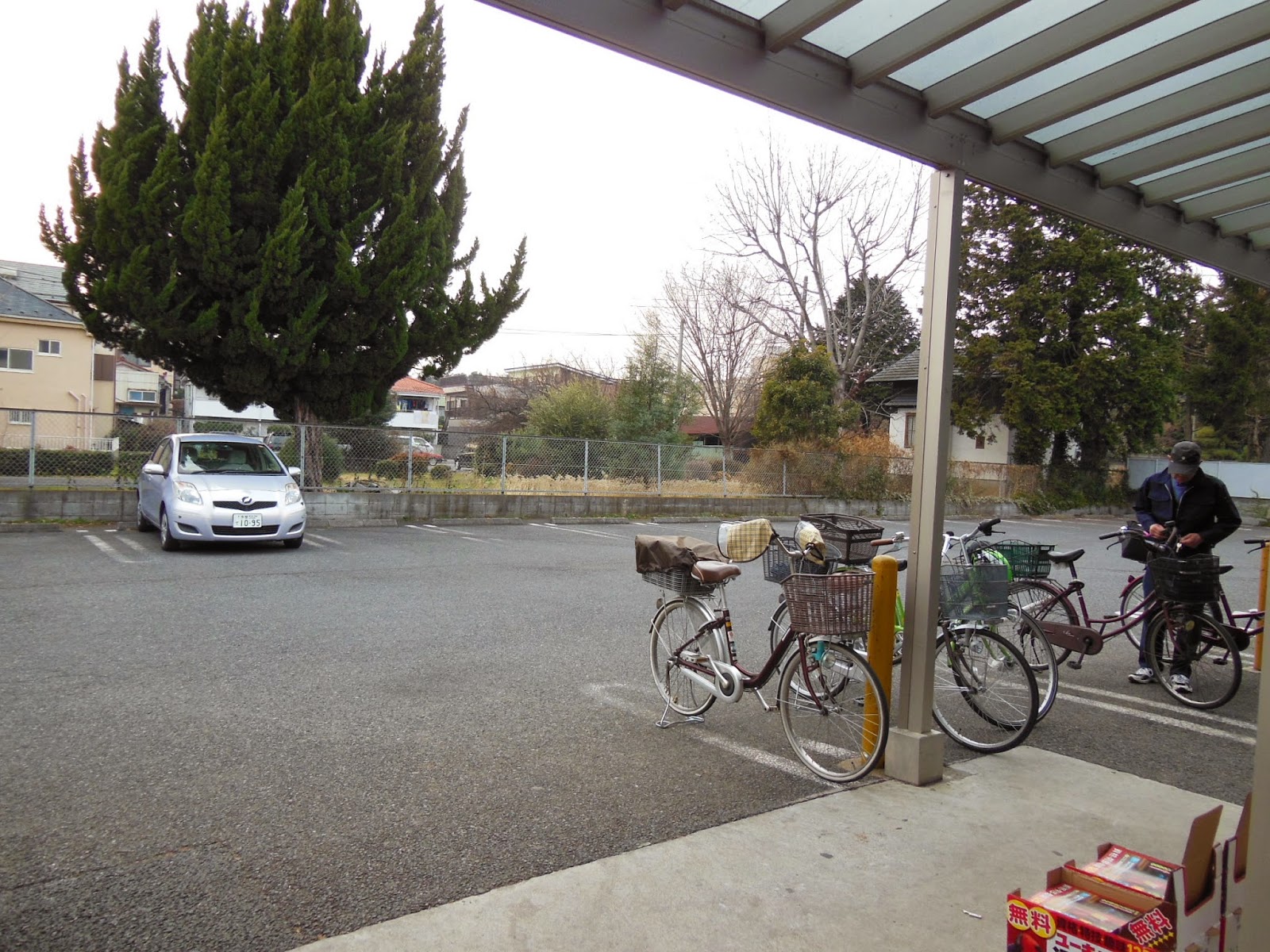
This is one of the stores I regularly shop at in Japan. There
are usually more bikes than cars in the "car"park.

Our experience isn't quite as stark, but it still is a challenge. To go from almost no choice on some things to large amounts of choice is hard. 


What makes it harder is that you actually "want it all". When we're in Japan there is food we miss. There is food we dream about. Choices we wish we had. Then, all of a sudden, we are presented with all the possibilities of our dreams. It is tempting to buy it all.

Then there is the financial challenge on a couple of fronts.
1. We're used to how much things cost in Japan, especially most groceries. We know what a good deal is and when something is too dear. We don't know that anymore in Australia. Not only are we not used to dealing with Australian currency any more, prices have changed while we were away. It is no longer clear what is a good price.
There are four aisles this long, way smaller than
a large supermarket in Australia. But then, they
don't stock everything I want. But they do have all
the regular things I need, so I'm happy.
The shopping trolleys are small too.

2. There are a lot of set-up costs involved in moving country. We had a lot of help  in setting up the large items in our house, and I mean stacks, to the point that we now have two microwaves, two vacuum cleaners, three printers, and seven mattresses in our house. Despite this we found ourselves reeling a little under the various other things that we needed to purchase, including school uniforms and books. Setting up the pantry has been an expensive deal too, even though I'm a cautious buyer. It's been important to me, because I know that a well set-up pantry will save us money in the long run. This is especially as I look at prices for take-away and restaurant meals in Australia and realise that feeding my hungry family of boys will really eat into our budget, if we rely on take-away meals too often.

Some people suggested early on that to deal with the stress of grocery stores I should go to smaller ones with less choice. Unfortunately those smaller stores are usually more expensive, which would have exacerbated the financial stress I was already feeling.

I'm not writing this to complain. We have enough. We have a lot more than some people in this country! I am very thankful. But I'm writing this as a portion of what my lengthy answer would be to the question: "How are you settling?"

06 August, 2014

Sort your rubbish?

Today has been more planning for presentations. Boring stuff to write about on a blog, really!
Rubbish collection station around the corner from
our house in Tokyo.


The fun thing was talked about over lunch, however, was an idea we've had for some time but haven't had time to put it into action. Aside from talking in front of groups of people in formal-type situations, sometimes we get the opportunity to do some more interactive things with groups. These are so much fun! In the past we've done slipper relays, chopsticks challenges, origami, a Japanese receipt game, and a language learning activity. 

This time we want to do a Rubbish Sorting Game. Sorting the rubbish in Japan is complex but a game based on this has the potential to make a fun activity to give people a feeling of culture shock. It's just that there are so many ways we could do it. We've been bandying around ideas for months now, but not gotten very far.

We talked in more detail over lunch about it today, though, and David's actually written some things down. Perhaps we'll make some progress on this soon?

It certainly takes our mind off the internet troubles that we continue to experience. Today we were supposed to have someone come, supposedly to "connect us up", but it didn't happen. The "outside team" that would make sure there was a connection that came from the street (as far as I understand it) didn't show up so the technician that did had nothing to connect up to. 

And so we continue to wait. But we're not in too bad a way, as long as we can continue to use this mobile internet out the back in our "patio office" it works pretty well and decreases the incentive to work at night-time when it's coolish out here.

12 July, 2014

Re-entry shock tales

Some of you may be interested to hear of the things that shock us in this time of re-entering our "home" culture. You might be surprised at how many there are. 

This evening, for example, we were driving a road that we know pretty well, when suddenly it split and the half we were on took a dive under a bridge. We thought we were headed in the wrong direction. No one had told us that that particularly intersection had been radically altered.


Early reentry shock last week involved impressions like how much space Australia has, so many parks, so much space between houses and the road and each other. We continue to be amazed at this. But I have to admit I don't miss hearing my neighbour in the shower, or the guy a couple of houses down blowing his nose just as we went to bed.

Sizes of containers at the store: eg last night my husband was shocked at the frozen veggie packets. They're usually about 250-400g in Japan. Here the norm seems to be around 1kg. Our boys are getting used to pouring 3L bottles of milk again, after doing 1L cartons for the last four years. 

Accent is another shock. This is slowly wearing off, but most Aussies sound to broad to the outside ear! Our boys' accents are fluxing and changing too. I wonder how foreign they'll sound to their classmates when they get there. 

I have a subtle feeling that people might or might not be staring at us. They often do in Japan (very subtly). Question is, if they are staring here, why?

My middle son and I had to answer this question at the optometrists yesterday: "So what's it like living in Japan?" We were speechless for a time until my 11 y.o. finally manage to spluttter out, "Lots of people!"

McDonalds menu here is so different to that of Japan's. It's so much more complicated. My first attempt at ordering I had an impatient cashier who didn't get that I wanted a wrap with salad and no fries or drink. Her terminology was confusing and her manner not that helpful. 

Japan is terribly organised and rules orientated. Australia seems a little lackadaisical after that. In some ways that is refreshing, like being able to chat with the drugs inspector at Cairns about snorkelling on the reef. In other ways, like when we needed assistance with the assembly of a new bike and being told we have to wait till next Tuesday (the only day this store does bike assembly), was a bit of a shock. 

We asked at the boys' new school where we would park bikes, as we're intending to get the boys to ride to school as much as possible. The admin lady had to make enquiries about this. Another lady said she doesn't know of any primary kids who've ever ridden to the school (Grades 1-7)!

We found that driving home at 7.30 on a work evening, there were very few cars on the road. This afternoon we drove right across the bottom part of Brisbane (from the east coast to home in the east of Ipswich) it only took 45 minutes! Where is everybody?

We've also rediscovered that driving in Australia is much easier than driving in Japan. The roads are wider, meaning we're not dodging power poles (which are often on the thinner roads in Japan), or pedestrians,or cyclists, or dumpsters, or even other cars. Many local roads in Japan are only just wide enough for two cars to pass if the above common obstacles are absent. But you still have to slow right down to avoid scraping side mirrors. Intersections on these skinny roads often require careful manoeuvring, not a straight-through drive. Being able to drive almost into the centre of town (about 26 km away) in only 30 minutes (encountering less than a dozen traffic lights) is no less than a miracle!

The stories will keep coming. Stay tuned!

05 April, 2014

You know you've been in Japan too long when you...

I came across this "You know you've been in Japan too long when you..." list. I'm not guilty of all of them, but as I'm about to transfer back into my birth country I thought I'd make up my own list.

You know you've been in Japan too long when you...

1. Are shocked when you see another foreigner and point them out to whomever you are with.
Japanese shopping trolleys are very small.

2. Can't answer a question about "what they do in Australia" or "what do they call this in Australia".

3. Can't remember how to use your credit card at the shop and don't remember what your signature is.

4. Think it's normal to carry lots of cash in your purse. (Goes with the above.)

5. Apologise for even brushing someone's arm.

6. When speaking in English, adding extra politeness, like "Oh, I'm so sorry." or "Thank you ever so much."

7. Think about distances between local places in terms of how long it takes to walk or ride.

8. Expect the weather forecast to tell you what percentage chance there is of rain today and the hour of the day it is likely to begin raining.

9. Tend to interpret the pictures first, rather than attempt to read labels or signs.


And here are some for when we get back:

10. Are amazed at the size of Australian money and toothbrushes and milk and shopping trolleys.

11. Are shocked at how much wasted space Australia has (eg. you could build a house on the land between that house and the road).

12. Not be able to make choices at the grocery store the first (and maybe second or third) time you go in there.

13. Wonder why people aren't staring at you.

14. Take your shoes off at the front door of someone's house even though they tell you to leave them on.

15. Can't throw all the rubbish into the same bin.

Do you have others to share (perhaps from a different expat experience)?

06 August, 2013

Beckoning in Japan

Early on in Japan a teacher beckoned to me, but I misunderstood her. Check out this video and I reckon you'll figure out why.