Showing posts with label disaster. Show all posts

11 September, 2026

It doesn't make economic sense

I've been putting off writing here, because I had too many unformed ideas competing for air time. Plus, this week I've had meetings every day, a lot more than I usually do. I've also discovered over the years that meetings mess with my ability to process my thoughts into written words. In any case, I'm here now, and determined to get something coherent written before the end of Friday.

Last week I listened to an episode from my favourite podcast: Undeceptions. The topic was close to my heart: Dis/ability. There was lots to chew on, including different theological ideas about what heaven will be like, whether the disabilities that people experience here on earth will have any part of that or not.

One of my favourite earrings. It's
a shard of pottery, created by a
group called Nozomi Project who 
began after the giant triple
disaster in Japan in 2011. They
made jewellery out of broken
pottery, initially from what was
washed up on the shoreline after
the tsunami. Their tagline was
"Beauty in brokenness", a 
beautiful way to think about the
brokenness that disability brings to 
people's lives.

As one who has worked as an allied health worker, I was thinking about this topic from well before I encountered disability as a parent. As an Occupational Therapy student we were trained to think about people holistically, to consider their whole lives and probably more than most professions in the field, to think deeply on what someone could do as opposed to what they couldn't do.

And then we had kids and got neurodivergent diagnoses which gave us another perspective on this whole topic, especially as our kids moved into post-school years.

I'm not about to rehash what was covered in this hour-long podcast, but wanted mostly to mention something that particularly jumped out at me. The host, John Dickson, interviewed Kirk Patston, the Director of the Centre for Preaching and Pastoral Ministry and a lecturer in Old Testament and practical theology at Sydney Missionary and Bible College. He's got lived experience as the parent of an adult son with a disability as well as professional experience as a former speech pathologist.

He and his wife were working in four churches when their son, Jerrah, was born. Kirk talked about the mentality of someone in Christian ministry where there is always a feeling that there's more you can do and a sense that you can always do better. This really resonates with me. It's a strange mix of our worth is based on how much we do, yet our faith is about God's grace, which has nothing at all to do with how much we do. They weren't getting much sleep because their son was having seizures and not sleeping and they both ended up having to "live off government payments and people's kindness for a year." It was very different to the church work they had been doing, and this of course meant they thought about who they were, what did God really want from them. See the full transcript at the end of this post.

Kirk said, "It doesn't make economic sense". Indeed, the whole field of disability can make you step back and think about human value. If our value is based only on economic output, then disability really challenges that. So does caregiving of little children and elderly people. (Cross-cultural mission also doesn't make economic sense, but I digress.) Kirk also said, though, that "that's not to say that the Lord's not in it, and that God might actually be doing something deep and important here."

I think this is an important point to think on: that even if it doesn't make sense from an efficiency point of view, it's not the only perspective. God has a different view on our lives and we need to trust him that he's got a purpose in the situations we find ourselves in, even if we don't understand it now.

A portion of the transcript of the podcast:

 John Dickson:

How has Jerrah, over the years, helped you think through, maybe not at the highest philosophical and theological level, just approach our topic that I wanna talk to you about of, of disability? Have you found that this experience, this lived experience has actually had a big influence, or did it just simply turn your mind to the topic, as it were?

Kirk Patston:

Oh, no. Big, a big influence. Kind of an undoing of me, really. Yeah. Um, I think I had a framework about Christianity, which I, I knew intellectually I was always had to work against, that, um, what God really wants from me is, you know, lots of service of other people, lots of activity.

A very kind of activist, uh, account of Christianity. So, my wife and I have… We’ve got theological training and have worked in church ministry, and you’re always feeling that there’s more I can do. There’s more people I could talk to about Jesus. There’s m- you know, there’s better pastoral care I could offer, more, you know, there’s how can we grow things?

So you’ve got that kind of story where you’re, you’re productivity based. Sure. Um, and, and but with paradoxically at the same time knowing that the Christian message is actually about God’s grace- Yeah … where, you know, we don’t earn and where we’re actually unable to- Mm-hmm … perform. So it’s, it’s sort of weird.

Like, there’s this clash in it, and oftentimes I would identify and know that clash. But then along comes Jarrah, and, um, he came along in a period in our life when Lisa and I had four churches to look after that were all struggling. Um, but one or two of them in particular were just sort of going through a time of change.

New people were coming. There was this sense of, aha, these churches that were dying are not going to die. God’s going to do something. And then along came Jarrah with these uncontrolled seizures, and, he didn’t sleep. He’d just sleep in 40-minute little snatches. So we just… Our life was so chaotic, we just got to the point we just had to walk away from our ministry roles.

We just lived off government payments and people’s kindness for a year. And, um, so then you think, oh, who am I? You know, who am I as a Christian? Mm. What does God want from me? And you begin to see the dignity of, and the, the wasteful dignity of I’m going to care for one little person with epilepsy, rather than four churches.

Yeah. Um, and it do- doesn’t make economic sense. It’s not efficient. Mm. But that’s not to say that the Lord’s not in it, and that God might be actually doing something deep and important here.

(This is a transcript with this note: Transcripts are generated using a combination of speech recognition software and human transcribers, and may contain errors. Please check the corresponding audio before quoting in print. I've removed some small errors, but I haven't checked the audio before quoting it here.)

30 December, 2021

Looking back at 2021

 The last two years I've used some interesting and challenging questions to write this last post of the year, so I'm going to do it again.

David and me enjoying a pre-Christmas
date.

1. What makes this year unforgettable?

  • Second year of the pandemic, what can I say...
  • Personally we've had tragedy, ill-health, injury, despair, close encounters with suicide, exhaustion, a creative ending to a high school career, lack of clarity about the future, etc. Some, but not much of that was related to the pandemic. Altogether it's made for a very challenging year personally. I'm thankful for a fulfilling job that meant that even when I had no answers for the personal pain we faced, I found joy and purpose in my work, and of course God gave me hope.

2. What did I enjoy doing this year?

  • Editing fiction in my spare time. I spent a couple of months early in the year editing a book by a friend of mine. First time to edit a book-length manuscript, first time to edit fiction. It was challenging in a good way and I hope I get another opportunity to do it again in the future (though it would be great if I could devote work-time, rather than spare-tie to such a project).
  • Baking and reading: my two passions I've continued to love.
  • Camping: we only made it out to two camping trips this year and one of those was shortened due to a typhoon. The pandemic made it difficult to book campsites across prefectural borders and we complicated things by trying to gather a larger group to do it.
  • Walking after dinner: this has become one of my favourite things too, most of the time I love catching up with my husband during our 4–5 km walk, and I miss it when weather or work or other events mean we can't do it for a few days.
  • Weekly video calls with our eldest son have been really great too. Often one or both of his brothers join and we usually end up playing online board/card games.

3. What/who is one thing/person you're grateful for?

  • I'm grateful for a solid marriage, for a husband who is calm and committed to his family, and we've walked through a very hard year shoulder-to-shoulder. Many people don't have that. I'm ever so grateful I do.
  • I'm also grateful to my friends. My daily-trio of friends as well as some other women who have emerged as even more precious than they were before.

4. What did you read/watch/listen to that made the most impact this year?

  • Mmm. Hard question as usual. Looking at the books I've read (post on Dec 13), I would suggest the Bogel book about overthinking was probably the most impactful. I also have enjoyed listening sporadically to a podcast call Undeceptions, for example the episode about a same-sex-attracted Christian was eye opening and ultimately very encouraging, another episode I posted about here on Friendship was also excellent.

5. What did you worry about most and how did it turn out?

  • This is something I can't share here due to protecting the privacy of my family. My worst fear didn't eventuate, but it still might, only God knows.

6. What's my biggest regret?

  • Not being able to see my eldest son this year (it's been 2 ½ yrs now).
  • I regret not being able to see any Olympics or Paralympics in person, despite living in the city where they were held.
  • Not having the emotional energy to do some things that I used to do.

7. What's something that has changed about me?

  • I think I've become a little less less zoned in on "what's next" for our boys. I've had a lot of my expectations for them stripped away (expectations I mostly didn't realise I held).
  • I did more teaching this year than I've ever done (mostly in the first quarter of the year). I still don't think it's really my wheelhouse, but it was good to have the opportunity to help other adults learn new things.
  • I've become even more discerning about who I bare my heart to.

8. What surprised you most this year?

  • How many people are rejecting immunisation. Also I've been saddened by Australia's isolationist policy during this pandemic. There are times that it felt like us expats weren't welcome in our home country. And no, I don't wish to have a discussion about this here or on social media. I have steered clear of writing about these things on social media.
  • I've also been happily surprised by some of the ways that I've seen my boys grow and change this year. As I wrote in this blog post, it's harder to anticipate when and what milestones older teens and young adults will achieve, but it's just as satisfying (or more) as when they  were learning to walk and talk.
  • I was also surprised at how difficult it was to get used to being back in-person after many months of online meeting.
I'm going to add two more questions here: 

9. What Bible truths impacted you this year?
  • "Be still and know that I am God" (Ps 46: 10) has been an ongoing theme since mid-2018. But I also spent several hours on an "accidental" retreat considering the whole of Psalm 46.
  • Also I've returned again and again to Hebrews 12:1-3 and Isaiah 40. Both are worth looking up and pondering deeply.
10. What meta-themes have you thought about this year? (in no particular order)
  • Efficiency isn't necessarily God's way or the best way.
  • Letting go of control.
  • Walking alongside older teens and young adults as a parent (of course all these first three are related!)
  • Lily pads (see here)
  • I got to ponder a wide variety topics courtesy of my work for example: pop culture in Japan, technology in ministry, history of the Japanese church, men in the church, the best uses of social media for mobilisation, rest, good editing practices, and macrons and other questions of the romanisation of Japanese (look it up, it'll either fascinate you or bore you).

Highlights:

  • Two camping trips, including camping in a new prefecture.
  • Several opportunities to spend time with family friends in-person for the day or evening.
  • Immunisation against COVID-19 (yes, a highlight)
  • Seeing the social media team that I lead continue to forge ahead producing excellent content.
  • Editing a fiction book (as mentioned above)
  • The new building and sports field at school. I've rarely been there and actually haven't set foot on the oval ("field" for Americans), but it's great to hear about how it's being used.

Lowlights:

  • Aforementioned tragedy and ill-health
  • Missed opportunities for good fellowship during online meetings, sometimes due to a lack of thinking-outside-the box by event organisers.
  • Shortened winter holiday due to an unexpected and dramatic medical event
  • Seeing my boys struggle
  • Too many online meetings and not enough people-time some weeks.
  • Church being online for most of the year.
  • Not being able to get to Australia (which meant some thinking outside the box for a few items I'd rather buy in person there).
Other thoughts

Writing: I did plan to write a blog post every month based on a book called Come Closer by Jane Rubietta. I did it for four months, but then failed to finish the rest of the year. In fact this year I've only published 43 blog posts, that's an all time low (my highest output was in 2011 at 369). It's been a busy and stressful year and I've often been tired. I have written two or three articles for each of the four magazines we've published, plus various social media posts and a a couple of online articles for OMF. But really, my writing output has been very low, an indication of how the year has gone, really. There's lots been going on, but much that I can't share with a wider audience and a lack of energy to invest in writing as well. Contrary to that I've done a lot of editing and continue to enjoy working with other people and their writing.

Goals: these were my stated goals for 2021 (in my first blog post this year) and I think I've done okay at these. How we worked towards #1 looked surprising at times to some outside our household, but there were good reasons for what we did. Of course these aren't "SMART" goals, in that they aren't Measurable, but then I think that there is much that needs to be achieved in life that can't be measured easily and isn't short-term.
    1. Looking after myself and my household as best I can
    2. Taking care to look out for others who are within my circle of influence—keeping my eyes open for opportunities to serve them and others further afield, and
    3. Working to the best of my ability in all the tasks that are mine to do.
I have pondered this blog post long enough and it's just getting longer the more I look at it, so it's time to release it into the wild. If you take up the challenge of answering these questions, I'd love to hear your thoughts (privately, if you wish).

18 August, 2021

On the edge of ordinary on the medical scene

Looking at July and August, all I've written about on this blog is holidays and camping! Anyone would think I've done nothing else. I actually only had 16 official days of holidays in those two months. Since we got back from holidays in mid July I've been at my desk most of each work day (aside from those two days of camping a couple of weeks back). It's always a challenging time of year to work, although as the boys grow older it's become much less of a problem. They are no longer running around the house during their holidays, demanding my attention at random times, so I've got a lot more headspace to devote to work.

David went back to work officially on Monday, so this week is looking more like business as usual, except that I've got two big boys sleeping away much of the day (yes, they are pretty nocturnal at the moment). When I say "officially", David's actually been in and out of school many days in the last fortnight. And he's been on his computer doing email and other admin things for a period most days, not to mention three Zoom meetings/training with OMF last week. Plus, he's been working on a project of digitalising a portion of his work that has existed on index cards that have been collected by dozens of teachers over the last few decades. So, I've not been alone in working at home here!

We do as much of our medical care as we
can in Japanese, but for some things we 
really need English service providers for.
We're thankful for the doctor near this
station who has been caring for one of our
sons over the last 2 ½ years.

In addition to that, we've been doing a few medical things. I wanted to write a bit about one of them—a visit to a dermatologist.

When you live in your home country you don't think about how the medical things that happen there are (sometimes) specific to your country. Of course you might think about how accessing medical care in another language is hard (and it is!), but I've got a different type of example you might not have thought about.

Skin cancer isn't common here

Australia has the highest rate of skin cancer in the world for men (not women, though we're close to the top of the list). Japan is not even in the top 20 countries in this list. But Japan is third on the list for stomach cancer and Australia doesn't feature in the top 20. (This data is from here.) 

These are interesting statistics, but the rubber hits the ground when you are not living in your home country. In Australia skin cancer is high on the list of things that your local GP will check if you ask them to (and in fact we've been told that the average Australian GP is better informed about skin cancer than the average dermatologist in Japan). Plus, there are many easily accessible skin cancer clinics that will give you a regular full body check. By contrast, in Japan, there aren't such clinics. And at annual government-funded medicals in Japan, they check for bowel and stomach cancer, but skin cancer isn't on the radar.

It just so happens that my husband has a family medical history (and now a personal history) of skin cancer, and so this is definitely on our radar as he gets older. I'm very grateful, therefore, that we live in one of the largest metropolises in the world. It's possible to find unusual services, like a doctor who has read up on skin cancer in Australia and is willing to "colour outside the lines" with foreign patients who have different skin and had different environment growing up to most of the Japanese population. It's not covered by our Japanese health insurance, but it's an awful lot cheaper and easier than going to Australia. It really is another example of how we live "on the edge of ordinary".

And life continues on...

Aside from all that, we're living pretty quiet lives here and trying not to be too stressed by the news of what's going on in the rest of the world. The pandemic is raging in Japan (between 15,000 and 20,000 new cases a day in the last few days, around 5,000 of those in Tokyo) and we're doing essentials, but otherwise at home. We're thankful that Japan is working hard to vaccinate—nearly 50% of the population has had one jab, that's 60 million people since they began in mid February. Maybe by summer next year Australia will welcome us back for a couple of months without requiring us to quarantine in a hotel at our own expense?

School (CAJ) starts the new school year for students from next Tuesday. I'm still coming to grips with the fact that we'll only have one at school this year. We're not sure what the year will look like for our middle son, but we're glad we have the means to be able to support him at this transition time of life, to give him a chance to figure things out.


09 March, 2021

International perspective on life in the pandemic

Quick summary of our current pandemic situation*

In early January the Japanese government called a state of emergency for Tokyo and ten other prefectures. This was to March 7, but has been extended for Tokyo and some other prefectures until the 21st.

On 3 March, the 7-day average of new cases/day: 

• Japan 1,030
• UK 7,173
• US 64,409
• Australia 8 

(It's interesting to note that both the UK and US numbers are falling but Japan and Australia—though admittedly the numbers are tiny in Australia, so it's a poor comparison—are holding steady at present, possibly related to the roll-out of vaccines?) 

New visas for Japan aren’t being processed, so this is holding up a number of short-term and new, long-term workers from joining us here in Japan.

CAJ has continued to start an hour later to enable most students to commute at a less-crowded time. This will shift back to a normal time as soon as the state of emergency is lifted.

Our Japanese church has been online since early January.

Our personal international perspective

As we talk with people in Australia, we realise that we have an interesting international perspective. It’s amazing how this global disaster is being experienced in vastly different ways around the world. In February, Wendy chatted with a missionary who is in the UK on home assignment. The restrictions they are living under there are very tight and quite depressing.

By contrast, talking with Australian friends, there is almost an unreality about it all now, with little threat being felt in much of the country. We realised with a shock recently that Queenslanders have made it through the majority of the last 12 months without needing to wear masks!

But the border restrictions are strict in Australia. As a result it would be challenging for us to go there right now. Yet we have American friends who have gone to their country and back, and had to quarantine only when they returned to Japan (with minimal restrictions in their own home).

Japan has many less infections than the US or UK, but more than Australia and the experience is different again. Though we’ve been in the midst of a state of emergency in Tokyo since the start of the year, the rules are vague and nowhere near as strict as Melbourne has experienced. That is partly due to the constitution that limits the powers of the government. However, 99.99% of people over five are wearing masks in public. Many churches are meeting online, even though regulations don’t insist that they do. But schools are still open.

Where the limits are strict in Japan are with allowing new people into the country. That has an impact on organisations like OMF and potentially CAJ, if they want to employ new, overseas staff in August. It also means that many meetings, workshops, and consultations that were previously held in person are being held online these days.

Vaccines are going to change things again, and we wait to see how that pans out. They’ve started vaccinating medical workers here, we wait to hear how the next stage will roll out.


*We sent this out in our prayer letter on the weekend and I thought it might be something useful to put on here too. Cross-cultural workers tend to be more aware of international matters than people living in their own countries, it's just a fact of life when we're brushing shoulders with people from a variety of cultures.

31 December, 2020

Looking back at 2020

It's time for my end-of-year blog post. 

Last year on this day I used some interesting questions to reflect on the year: http://mmuser.blogspot.com/2019/12/looking-back-at-2019.html They were good questions, so I'm going to use them again.

1. What makes this year unforgetable? 
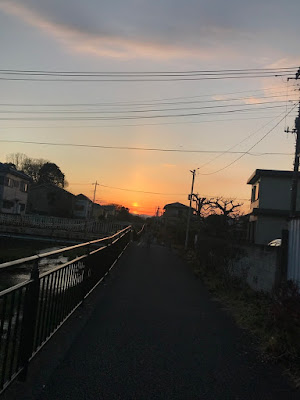
Sunset late in 2020 near our house.
  • Well that's easy for 2020. But, unusually, probably similar to most of you: it's experiencing a pandemic, something we've only ever glanced over in the history books.
  • For the first time I can remember in my life, I've been encouraged to stay home! All of us working from home during March-June was quite a challenge (though David did spend a good portion of that working at school, seeing as he has his own office only 300m walk from our house).
2. What did I enjoy doing this year?
  • Baking. I've always enjoyed baking, but often it's been something that's squeezed in between other commitments on weekends. This year, with everything cancelled mid-year and not much to look forward to, baking was something I could not just plan for, but look forward to, and control. It even enabled me to give some small pockets of joy to others outside our family, in a safe way. This year, I also inherited a stand mixer. First time I've had one in Japan. That was also mostly due to COVID (the owners suddenly decided to go back to Australia when they discovered they were expecting twins).
  • Camping. As always. But amazingly, despite the restrictions, we were able to go camping three times, with a couple of firsts: the first time in Gunma prefecture and the first to camp on our own without kids (we were camping with friends).
  • Watching God work in unexpected ways. 
    • One of those was related to camping. In April/May I had a short conversation with a colleague/friend whose teenage boys had had to suddenly evacuate from their international school in India when borders closed. Her boys were lacking connections in Tokyo, never having lived here. They are around the age of our our youngest son and I was pretty sure that, given the chance, they would be good friends. So, in a God-inspired moved, we invited them to come camping with us in July and they hit it off, not just with our son, but with his group of friends. Despite living on opposite sides of this great metropolis, they've managed to get together quite often. Amazing. 
    • And that's just one example. I've heard other stories—one just the other day about a Japanese couple coming to faith this year, despite how hard it's been to meet together.
    • A third is this story from March, when I sent a pair of earrings to a friend, and they arrived the day after her son died!
3. What/who is one thing/person you're grateful for?
  • I'm grateful to my two friends with whom I formed a trio over two years ago now. We've helped each other stay afloat with daily messaging through what has been a horrid year. 
  • Technology, without which much of the above wouldn't be possible and we'd be a whole lot more isolated from one another. We attended church online from mid-March to mid-August this year. Without technology that period would have been much more difficult.
4. What did you read/watch/listen to that made the most impact this year?
  • Hmmm, a hard question, as it was last year.
  • For the first time I've used an app called Goodreads to track my reading. So I know that this year I've read 108 (maybe 109 books, if I get my current book finished today). It tells me that that's 37,00+ pages with an average book length of 348 pages! Many of those have been crime/mystery type novels. I've always loved this genre and this year found reading to be especially calming when life around about us was in a turmoil. Last Christmas I received a Kindle Fire and I've used it extensively to borrow ebooks from the library, it's been a lifesaver.
  • I enjoyed participating in a book club for the first time in my life. Naomi Reed spontaneously started a somewhat random Facebook-based book club to read through some of her books. We started with My Seventh Monsoon, then No Ordinary View, and Heading Home. I think she's done more, but I didn't own those books. The first two were especially interesting to do during the depths of the State of Emergency in Japan (April and May), providing some outside interaction that wasn't work-based.
  • I read some books on first-person experiences of mental illness that were helpful in my understanding.
  • It's interesting to note that the verse I cited this time last year has stuck with my through this year also: Ps 46:10 "Be still and know that I am God."
5. What did you worry about most and how did it turn out?
  • Figuring out how to live with this new infectious threat has been a huge challenge. Just going out to get groceries (which was almost the only reason I left the house from mid-March onwards for several months) was stressful. Watching other people's reactions on social media was also stressful: for example seeing people go out and then ranting about how many people were out and seeing people declare that they won't get the new vaccine was also worrying. However, we've made it to the end of the year without dying, or contracting this new disease!
  • I really didn't want the Olympics cancelled, ironically! We amazingly had tickets. But it did. We've still got tickets for the Paralympics, if they happen in September next year!
  • Learning to wear a mask every time I was out was challenging, and I still haven't found one that I can wear for many hours at a time without ending up in pain.
  • Unrelated to the global pandemic has been my concern for my older two boys. They are both on the verge of new things as their current studies come to an end in 2021. Neither knows what they want to do next. Our middle son is on the verge of adulthood and transitioning to life in Australia. There are many things that concern us about that transition. This has been a big worry for me that I've tried had to hand over to God regularly, with varying success. It remains to be seen how all this pans out, we probably won't know for several years!
6. What's my biggest regret and why?
  • Hmm. Possibly, not being able to be with my friend in Australia when her son was dying. I think that was far harder than I'd anticipated.
7. What's something that has changed about me?
  • I've enjoyed a new habit formed with David: walking three times a week in the evening. That's a new way for both of us to get exercise. It's been a good time to debrief from the day too.
  • To think deeper than that...I'm not sure. This year we passed the 20-years mark, 20 years since we left Australia as missionaries for the first time. It's also 10 years since our youngest started school full-time and I started work in the publishing industry more intently. 2010 was a big year. It's been good to reflect on that journey during the year and see how far I've come. I'm gradually being called on more often to teach others about writing, editing, and other communication skills, rather than just doing it myself. I guess that's been something of a change of mindset over the last 12 months, or longer.
8. What surprise you the most this year?
  • I think I was surprised by how much I need to have concrete things to look forward to. Having so much cancelled in March and April (and ongoing cancellations since then) was really hard. I was reduced to looking forward to small things, like looking forward to watching a favourite TV show in the evening, and baking on a Saturday.

So, after that focused reflection, here are some highlights from the year (some have been mentioned above):
  • Our three camping trips and two family holidays in the mountains.
  • Reading large quantities of books!
  • Seeing the new prayer book for Japan published after 18 months of work.
  • Successfully leading a series of three, online meetings that comprised our magazine's annual planning time.
  • Good conversations with friends.
  • Deepening friendships with some friends who were more like acquaintances before.
  • More Saturday sleep-ins due to sports events cancelled.
  • Finding the capacity to write some poetry/song verses to express deep emotions.
  • Leading a writer's retreat weekend in March. 
Actually I think this year is more marked by what wasn't, rather than what was! So many things that usually make up the fabric of our year just didn't happen. Some we missed acutely, others not so much. On Jan. 4 this year, I wrote a hopeful list of things that I was looking forward to for the year. Three of the six things on that list never happened. I am thankful that three did!

Some lowlights of the year:
  • My friend's son dying in March.
  • In-person school being cancelled from March to June.
  • Not being able to see our eldest son at all this year in person.
  • Losing a few more friends in my expat "colander" life!
Today is the end of a remarkable year, one that will be a bookmark for the rest of our lives! 

I'm thankful that, through it all, I've been comforted by the one thing that never changes: our God. I reflected on this in April here, and verses like 
"We have this hope as an anchor for the soul, firm and secure" (Heb. 6:19) 
and 
"The name of the Lord is a fortified tower; the righteous run to it and are safe" (Proverbs 18:10).

As I mentioned earlier, "Be still and know that I am God" has been especially important to me this year. A real sense that though I have little influence in this world, God knows what's going on and my role is largely to stop and trust him in the midst of the chaos. So, as the old year ends and the new year begins, I want to remind myself to do this:
"In the morning, Lord, you hear my voice; in the morning I lay my requests before you and wait expectantly" (Psalms 5:3 NIV).

My next blog post is going to be an interesting one, as I ponder the year ahead. It seems even more uncertain than a usual year, so how does one even do that? The first post I wrote this year I suggested that 2020 would be a quiet year (primarily with the thought that we might not engage in any international travel). I had no idea just how quiet it would be!