Showing posts with label resilience. Show all posts

06 November, 2019

Friendship goal—12 months later

One of the things OMF missionaries in Australia are required to do on home assignment is debrief with a psychologist (possibly other places too, I can't generalise, though, because I don't know). We did that as a family last July, but OMF encouraged us to go back again if there were things we'd like to go deeper on. I sat on that encouragement for a couple of months and then decided to give it a go.


You see, I'd been finding myself hit harder and harder with the losses of life. The missionary life has more losses than most people encounter (see this post I wrote about the colander of expat life), and I was finding that even small losses were hitting hard. If you've been reading here a while you'll have probably noticed that I've talked about that over the years. Anyway, we've also seen people knocked off the mission field by burnout and knew that if I could avoid that I wanted to try.

So I went to a psychologist and talked to her. This is what I wrote not long after that:
She asked a lot of questions about my friendships and realised that though we have worked in the same organisation for 18 years and in the same location for the last 12, my friendships have had a lot of change over the years, even people who seemed that they would be there for the long-haul have had to leave for various reasons.
Even the other day I realised that many of the people I interact with now don't know the people I was interacting with, even two years ago! Between being in cross-cultural ministry and involved at an international school, we've got a lot of people continually moving in and out of our lives.

The psychologist made several suggestions, but the one that stuck out for me was to gather four friends around me who were less likely to move out of my life and make them the base of a pyramid. I realised that I'd been avoiding investing deeply in relationships in Australia because of the distance, however the truth is that my friends in Australia are generally more stable than the ones I'd been making in Japan. The friends I have in Australia are long-term ones that I keep seeing when I go back there.

Finding friends at a different level
So I set myself the difficult task of deciding which of my friends I'd ask for this deeper commitment of and then steeling myself to ask them. It was not easy. I felt like I was back in Primary School vulnerably asking someone to be my best friend! But I'm here to tell you, one year later, that it is making a difference.

Two of the ladies I asked happened to be good friends with each other and I texted them, almost impulsively, one afternoon in October last year. Asking if we might not join forces and become a support group for each other. That was the start of something I could never have imagined. They both messaged me back within a couple of hours, almost jumping out of the phone screen with enthusiasm. I was blown away—it truly was God's timing. We continue to remark on that very thing and give praise to God.

But that was just the start. I had imagined period Skype calls, but it's turned into almost daily contact between at least two of the three of us. Twice in the last week I've been at a coffee shop messaging with one or both of them (unplanned in both cases). It's almost like they're here with me! I've never experienced anything like it, outside of the friendship that goes with marriage, but even different to that, because they're women and they understand a woman's heart in a different way to a husband.

I also couldn't have imagined the sorts of things that the three of us were to go through in the months following that initial text. It's truly been an incredible, sometimes heartwrenching journey, and being able to do it together has enriched and strengthened each of us.

I have two other good friends who are committed to staying in touch, though we don't chat as often. But I know that I can go to either of them with honesty and bare my heart, or ask them to pray about something very private. And I'm pretty sure they know the same about me.

Having these four friends helped me through the vulnerable time in June at the end of the school year, when so many goodbyes are "I don't know if I'll ever see you again" goodbyes. They've also given me the courage to not hold back from making friends here. It's a temptation you need to fight after a few years of saying goodbye to friends you've invested your heart in.

What might I have done differently?
I'm not a fan of those "write to your 16 y.o. self" letters. However, pondering this journey I've been on now for 19 years makes me wonder what advice I'd give myself on friendship when I left Australia to become a long-term missionary in November 2000? (And no, I wasn't 16 at the time!)

I don't think I'd advise "daily friends" in Australia. I think it is important for new missionaries to leave their home country and friends and do their best to cleave to their new country and the people they find there. But in 2000, we didn't have the advantage of free messaging or Skype calls. However, maybe I'd advise writing/emailing more regularly to a couple of good friends?

I might advise me as a new missionary to be aware of grief and what it looks like, and not to downplay small griefs. You don't need to lose a parent or a spouse to experience grief. To be aware of how many goodbyes I'd already made and how to process that a little better. To have more realistic expectations about the relationships I'd make in Japan with expats. To make sure I had a few more things in place to help me be more resilient?

Thankful
Our home assignment last year was really hard in so many ways, yet there were things that were good about it, and this is one of them. I'm so thankful for the psychologist who advised me and for these four women who have taken the risk of being friends with someone who isn't even in the country most of the time!

02 April, 2018

Building resilience in middle age?

Building resilience in children is a popular topic these days, but this article by Tara Parker-Pope rightly asks, what about adults, can we build resilience too? The answer is yes, and perhaps we even have an edge over kids, just because we are often better at things like regulating our emotions and have a broader perspective on life because we've got more life experience.

The article has some good suggestions for how to speed our emotional recovery when life hits you with challenges.
And of course I would select a wrestling photo. Resilience is one
thing that a wrestler needs in spades! You won't go far in most
sports without it, actually.


  • Practise optimism. Look at a bad situation in a more hopeful way, hang out with optimistic people. I generally don't find this too hard as I'm an optimistic person, but I can imagine some would struggle with this.
  • Rewrite your story How we talk to ourselves and others about our struggles affects how we cope with them. For example, I could be saying "woe is me" about our son moving to Australia, however, I'm deliberately focusing on this being a great opportunity for growth in him (and us) and that this is what we've been preparing him for for the last 18 years.
  • Don't personalise it. This is one I struggle with. I tend to blame myself when I've made a mistake or something I've done has caused the problem. I struggle with perfectionism and am sometimes too conscientious. This quote from the article is helpful: "remind yourself that even if you made a mistake, a number of factors most likely contributed to the problem and [then] shift your focus to the next steps you should take."
  • Remember your comebacks. This is where a bit of life experience comes in handy. Remind yourself of when you've had tough times before and gotten through them.
  • Support others. A strong network really helps. But apparently you can get an even bigger boost in resilience by helping others.
  • Take stress breaks. I'm sometimes good at this, sometimes not. Depending on the situation. Parker-Pope suggests things like a walk break, lunch with a good friend, or even a five-minute meditation. Muscle growth occurs during the rest time following training (or stress), same for our emotional strength.
  • Go out of your comfort zone. Yeah, well this isn't hard to do in our expat lives. The author suggests things like taking an adventure vacation (camping, anyone?"), take up a new sport or craft.
I would add a couple of suggestions:
  • Remember when God has helped you in the past.
  • Have a healthy, balanced lifestyle as much as possible: eat, rest, play.
Most of all, keep your eyes on Jesus. Honestly, Scripture and song steeped in Scripture have been my go-to when life gets especially tough. Some of the comments on the above mentioned article point out that when life gets really hard, these coping mechanisms just don't hold you up sufficiently. I would say in answer to that that's because there's a spiritual element that's missing. You can't do it on your own, though many try!


15 December, 2017

It's about how you recharge

Here's an article I came across 18 months ago about resilience. It asserts that resilience is "about how you recharge, not how you endure"
This is OMF's house, really it is three apartments,
we'll occupy the whole upper floor.

We often take a militaristic, “tough” approach to resilience and grit. We imagine a Marine slogging through the mud, a boxer going one more round, or a football player picking himself up off the turf for one more play. We believe that the longer we tough it out, the tougher we are, and therefore the more successful we will be. However, this entire conception is scientifically inaccurate.
It involves not just physically resting, but giving our brains a rest too. So when you're taking a break you're not looking at email, or mulling over a work problem, or getting riled up about politics or family problems (as best you can). For me that means that taking time to get out in nature, or being absorbed in a good book that allows you to depart from your work and family stressors, are good things. Spending time with friends, chilling out with a movie, and taking time to be creative also work. 

What helps you rest?

I'm about to do all of the above. From tomorrow we're taking our annual Christmas holiday. A week at an OMF holiday house in the foothills west of Tokyo. We've been holidaying in this area at this time of year since 2006, the year after we first moved to Tokyo. It's become a much anticipated and loved time away.

For me it means sleep-ins, lots of reading, hanging out with the family, simple meals, and a few fun outside activities like a favourite restaurant. And really leaving work behind. 

I'm a bit concerned this time, though. I had all my ducks lined up, all the work I needed to get done so that I could walk away for a week and leave my computer behind. But today, for reasons unknown to me I've lost administrator access to the OMF blog, so the three posts that I was going to put up for the coming ten days can't go up.

The main person who helps me through problems like this lives in the UK and doesn't get to work until 5pm our time, by which time I'll be out of the office doing errands and then going to a Christmas party. Maybe, if the problem gets fixed by tomorrow morning, I'll be able to squeeze them in before we go, but it isn't ideal. But "shouganai" as the Japanese say: there's nothing I can do about it right now. 

Aside from that blip, I'm doing my best to get everything else out of the way so that next week can be a great recharging week!

07 June, 2017

Hints for staying afloat

Green spaces have helped me deal with the colander aspect of my life.
On Saturday afternoon I went to a farewell party for a family that we've have several different connections with. Their eldest two (out of five) children are in our youngest son's class. So I've been at various class-related events with this mum, including an overnight school camp. This year we've done sports with them too. Our paths have crossed for a few years and are diverging this month when they go to Singapore, closer to the dad's ministry assignment.

On Monday I went to the month OMF prayer meeting at our headquarters and we said farewell to three couples. Two are going on home assignment the other was just a temporary fill-in at the guest home.

Today I had morning tea with some OMF mums who have kids at CAJ. The youngest child of one of them graduated last week with our son and they're now going on home assignment (yes, one of the couples we farewelled on Monday). They hope to return next year, but possibly we won't see them for two years because we ourselves are going on home assignment this time next year!

Yep, farewells.

This week I found another post about resiliency. It's more about what helps you to settle where you are. The author suggested four things that have helped her maintain health and resilience:

  • Stay physically active.
  • Be fully present.
  • Make friends.
  • Unapologetically embrace your field.

I've touched on this topic a few times over the years, it keeps coming up and I need to keep working on staying afloat. Last year I linked to an article that had eight tips to help expats stay in their country of service. That list is:

  • Love the ones you're with.
  • Keep exploring. Keep learning.
  • Be you. (Or possibly before you can be you, discover you. I came as a young mum, I've had to figure this out as I've gone along.)
  • Be honest about the hard things. (But be careful who you share those with.)
  • Say hello well. (Be open to newbies)
  • Say goodbye well.
  • Help your kids say goodbye well.
  • Say "hey there" well. (Become friends with the locals.)
Yep, lots of good things. I might add some more that have been important to me:
  • Look after your health in general (sleep well, eat well, rest well, look after your spiritual and emotional health).
  • Take time for yourself. (Different people need different amounts of time, it turns out I need more reflection time than others in my family.)
  • Maintain connections with people who help but don't feel you need to stay close to those who don't.
  • Spend time in nature.
That's a fair range of things. Different personalities have different needs and levels of need.

What things do you find that helps you stay afloat? Be it in a foreign country, or in your own country?

16 May, 2017

It's a season of grief

We're heading into the annual season of transition here. It's what I wrote about last August (The colander of expat life). 


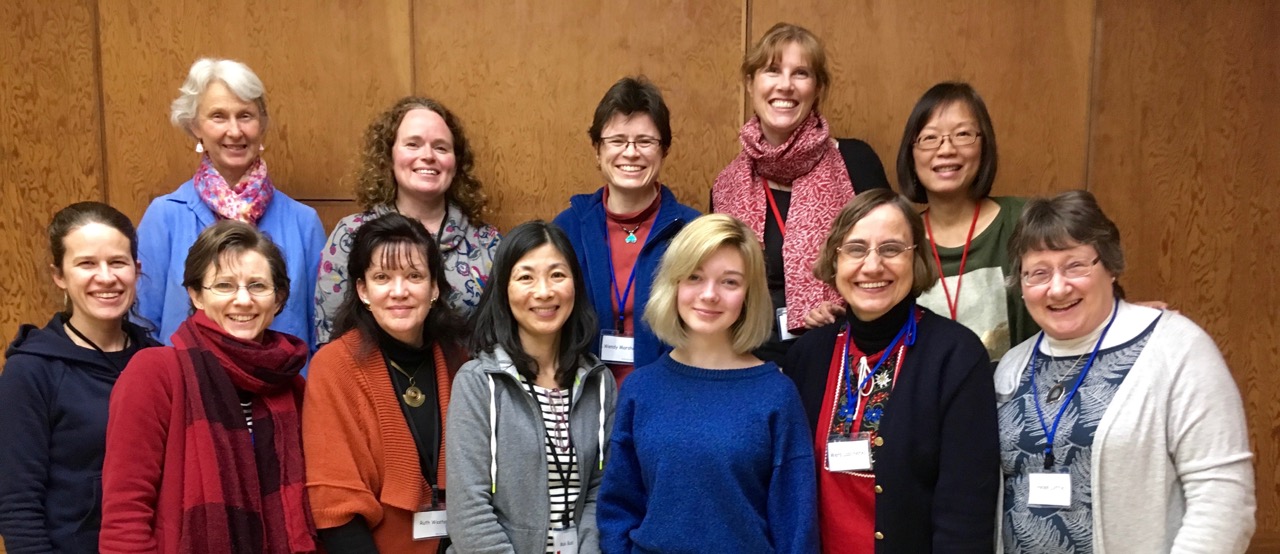
As an example. These are the OMF missionaries who came to the women's
retreat in March. Two of them have or are retiring this year (which
means they're returning to Canada and Germany). Two are going
on home assignment (Australia and US) and one is a short termer who
won't be here long. One is new to Japan this year, another I've only
known just over a year. That's a lot of movement for just a dozen women.
We live in an expat environment. Missions have a high turnover. Roughly 15-20% of our OMF Japan missionaries are on home assignment at any one time. On top of that, it is well-known in missionary circles that Japan has a higher than average attrition rate for missionaries, so many missionaries we once claimed as colleagues or friends are no longer here and aren't coming back. 

And even more, our family lives almost within spitting distance of the school that four out of the five of us go to every day. International schools have high turnovers. I think our school has a 25% turnover of students every year (lower for teachers). That means 25% of the students who are there now weren't there a year ago. And 25% who are there now won't be there next year. That adds up.

In this kind of environment you make friends and you lose them, often. I listened to a talk on resiliency yesterday and one of the key ways the speaker advocated building up our resiliency was by investing in relationships. I do. But every time I lose one of these friends my resiliency takes a hit. I have to admit that it is getting harder to get up again and invest in someone new.

School finishes in under a month. After that people will leave temporarily, or permanently. Goodbyes will be said, or not said. I'm not sure which is easier.

This article grabbed my attention yesterday, it's called "Embrace the Life You Have". It's especially written about life's disappointments, when life doesn't work out as you'd hoped or planned.

I'm not sure what kind of life I'd dreamed of, but I certainly didn't dream of having so many friends who no longer live in the same country as me. As an aside: I certainly didn't dream of parenting teenagers would be so difficult either!

The article encourages us to "weep deeply over the life you hoped would be". Feel the loss. Then to wash your face and move on to embrace the life God has given.

I'm trying. I'm trying to feel the grief, but also to wash my face and embrace what God's given me. But it isn't easy.

08 May, 2017

Nature refreshes

Through these trees you can just glimpse a river (which isn't
 that pretty, it's banks are reinforced with concrete)
and a train platform.
Someone said to me today, "You look tired. Are you okay?"
Same tree, swivelled a little to the left to capture the context. This is a busy
place. The building is a medical university. Just beyond the tree on the same
side of the road as the tree is the entrance to another train station. Lots of
people move through this area every day. It's a delight to have these
enormous trees brighten the journey.
I feel tired. There's a lot of reasons for that, it's normal at this stage in the school-year cycle for us, but of course we've had grief in the last couple of months to deal with. At the OMF prayer meeting I went to today a counsellor talked about building resiliency in ourselves and in others. One of the things she mentioned was taking time to appreciate nature.
On my way home from the meeting (a four-train journey), I stopped for a moment to appreciate the beauty depicted in these photos. I didn't get the best photos. I was dragging a heavy suitcase and not inclined to muck around with getting the perfect position to snap a shot.

I feel a bit refreshed by seeing these, taking a photo, and now posting them for you to see. Not to mention, admitting my sadness and fatigue to you here, which apparently is another way of building resilience and coping with distress.

Hopefully I'll be able to get back to writing here on a regular basis. I've found it difficult to do that in the last 10 days.