24 February, 2021

"Come forth"

We had a rough week last week. I can't share the details—it's not my story to tell—but it involved the death of someone we knew. I've been a bit lost for words, but I did know that, in the midst of my current busy-ness I needed to find time and space to think about this loss and that writing is one way that I do that. So I took some time on Monday to go to a park and think about the week that's past (when the weather was warm and the rest of my family were home on a long weekend). But the writing I did then is not something I can share here.

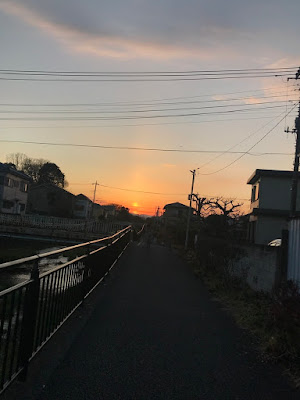
Monday was an unusually spring-like day, even
if many of the trees are still leafless.

But I also remembered that I'd decided to work my way through a book called Come Closer by writing about one verse a month (corresponding to one chapter in the book). And it turns out that the next chapter in that book is about death. About the story of Lazarus' resurrection:

Jesus said, "Lazarus, come forth" (John 11:43.)

Oh, don't we all wish that the Lord would say that for loved ones we've lost? We groan in this death and pain-marred world.

We don't want it in our lives, we try to deny that it happens. But can we allow it to turn our eyes to the truth? That we were made for Eden, a perfect world, with no sin or death. That our longings for an unmarred world are really longing for that, and for life everlasting in heaven. Read God's words:

And I heard a loud voice from the throne saying, “Behold, the dwelling place of God is with man. He will dwell with them, and they will be his people, and God himself will be with them as their God. He will wipe away every tear from their eyes, and death shall be no more, neither shall there be mourning, nor crying, nor pain anymore, for the former things have passed away.”
And he who was seated on the throne said, “Behold, I am making all things new. (Revelations 21:3–5 ESV)

Right now we don't know the answer to the "Whys?" And that's not comfortable. But for those of us who follow the God of the Bible, we do know that there is a future in which all of this pain will be gone. And for those who have gone before us, that their pain is now all in the past. That is something to hold on to, even as we mourn their loss to us.

I'm also left with the question, like last time I wrote on this "Come" series—how can I live abundant life now, even as I get weighed down by the griefs of this life? I think one key is found in one of my favourite passages. Looking to Jesus—

Therefore, since we are surrounded by so great a cloud of witnesses, let us also lay aside every weight, and sin which clings so closely, and let us run with endurance the race that is set before us, looking to Jesus, the founder and perfecter of our faith, who for the joy that was set before him endured the cross, despising the shame, and is seated at the right hand of the throne of God. Consider him who endured from sinners such hostility against himself, so that
you may not grow weary or fainthearted. (Hebrews 12:1–3 ESV)

Music played a part in my reflections at the park on Monday. Here's one song I missed, though:


04 February, 2021

January was an unusual month for me at work

Last week I worked in a team of three people facilitating a workshop that helps prepare missionaries for home assignment (PHAW). It was my first time! And the most formal teaching I've ever done. Not to mention, the first time I've been a presenter on the "in control" end of a Zoom workshop. I spent nearly 40 hours on Zoom over the two weeks of the workshop and I'm exhausted this week! It's taking me a while to get back to a "status quo" of energy, and given that it's already Thursday, I'm thinking I won't be back to 100% before the weekend.

One of my favourite things about this course is the amount of writing you get to do. We were participants back in 2003 and 2009, at the end of our first and second terms. This course was one of those things that God used to awaken in me an understanding that I love to tell stories, and that I love to write about things that have happened in my life.

As facilitators, we had to give several presentations of stories we've written to demonstrate what was possible. So in the weeks leading up to the course, I got to indulge in writing! Of course writing for speaking is a little different, and this course is very strict on time limitations, but it was still fun. I'm a bit peeved that Blogger seems to disallow cutting and pasting from Word these days, otherwise I might have shared a five-minute talk I gave last Monday. I'm not sure I want to type all that out again...

Picking up this new role has pushed me outside my comfort zone. I'm very at home sitting at my computer, working on other people's writing (and my own), managing a couple of remote teams, and working with social media. Not that my role has been static, or without changes or challenges over the last five years. But teaching adults, using someone else's curriculum, and over Zoom was way outside what I've got experience in, and so I've felt very stretched this last month. But it's been good for me. I have a tendency to get bored, so a new challenge was welcome, but I also know that the older we get (yes, I know I'm not even 50 yet), the more set in our ways we become and the harder it is to change. So shaking that up every now and then is helpful. 

As I worked on this new job assignment through the month, I also became aware that, though I'm not trained as a teacher, I have a good amount of experience on the topic that we were talking about: home assignment. We've done a total of three and a half years of home assignment in the last 16 years (not counting the 21 months of deputation we did prior to coming to Japan the first time), so it's not a topic that I know nothing about. It's good to be able to pass something of my experience on to others. Not to mention that I've pretty comfortable with working on succinct writing and working with writers, something this course demands. However what I found more challenging was the listening skills required: for some of the time we were critiquing talks, not written work like I usually do.

I also enjoyed working more closely with people. Though I work with people all the time, I don't talk to them often. Interacting daily in a team, even virtually, was stimulating for this ambivert (extrovert with a strong introvert shadow). Before the week started, I packed my bag and moved to our mission's Japan guest home and headquarters the other side of Tokyo—in order to give my all to the course, and to minimise the disruption here at home. (This role required me to be working late and being on video calls during times when others would be using the room I call my office, but which is also in our family's living area.) As I was working in an office building, I also saw colleagues who I otherwise never see. It's the first time I've had an office outside of my home since I became a mum in 1999! I got quite giddy being able to pop my head into someone's office to ask them a question. And I took the time to go for a long walk and talk with two of them.

But, I have to say that I'm glad that that intensity is over for now. I could not, and have never entertained the thought, that I could be a teacher year-round. I'm happy to be back at my desk, doing what I usually do again, even if it doesn't generate the adrenaline-rush that I had going last week.

Best get back to my day-job...


18 January, 2021

Top 10 tips for working with editors

This week I'm preparing to teach next week at an online course that prepares missionaries to do home assignment. This online teaching is becoming a trend in my life—I've also been asked to teach at an online OMF writing workshop in March.

Big difference is that next week we've got a curriculum to follow and other "facilitators" to work closely with. The one in March I've got a lot more freedom with.

One of the things that I've been asked to prepare for March is a "top ten tips list for working with editors". I know that many of you won't have had the experience of (or interest in) working with an editor. But I thought I'd throw this out there for any who have and to get your ideas/feedback. 

The workshop is focused on non-fiction books. While I have a fair bit of short-writing non-fiction editing experience now, I don't have experience in editing books, so that's a bit of a challenge. So some of these tips might be more suited to magazine editing, than book editing.

From the perspective of an editor, here are some things I'd like to include on my Top 10 list:

  1. An editor is not your enemy, this isn't personal to them, be professional in your interaction with them. Editors want to make your work shine, work with them to help that happen.
  2. The editor may understand your audience better than you do (especially the case for magazine editing).
  3. Don't think that your work is perfect when you give it to an editor, they will make changes.
  4. An editor is your "first reader", their job is to catch the things that will puzzle or bother your readers. They will see things that you can't see because you are too close, for example, where you've not given enough explanation, or too much.
  5. Welcome rewrites, an editor usually has a good reason for asking for one.
  6. Take note of deadlines, word limits, and other instructions an editor gives you, again, there is a good reason. If you're having trouble meeting a deadline, let the editor know sooner rather than later.
  7. An editor can help you become a better writer, welcome feedback.
  8. Communicate succinctly with your editor. They are busy too, they don't need multiple emails/texts/phone calls from you.
  9. Be accurate—make sure you check your facts and sources, this will save time later. Not every editor has the time/resources to check these things, the integrity of your writing depends on you checking.
  10. If you make changes when an editor sends you edited content, make sure you note where you made the changes (eg. by using Track Changes in Word).
What do you think I've missed? Anything here that I shouldn't include? Any surprises here?

13 January, 2021

Came to give abundant life

Last Thursday night I went to bed feeling unsettled and with a weariness of soul that doesn't come from a busy day. When I'm feeling a bit off emotionally, I find it helpful to think through what's been going on to see if I can trace it back to a cause, usually I can. 

That night I listed off several reasons for feeling off: from the trivial—a bad ending in the book I'd just finished; to the more serious—global news with Tokyo's pending state of emergency and the horrid situation in Washington DC. And then on Friday morning I dragged myself out of bed with the outside thermometer flirting with 0˚C. When I pulled out my phone I soon discovered that my home city of Brisbane was suddenly going into a heavy lockdown for three days. Ah, my heart felt heavy.


Any thoughts we had that just changing the calendar over to a new year was going to fix all that was wrong with last year where quickly squashed, weren't they?

So, I'm going to begin my reflections on "come" this week. "Come" is something God does, but he also says it to us. In the coming months I'm planning to work my way through the book Come Closer by Jane Rubietta, especially looking at the fifteen verses she focusses on. 

The first chapter is called "Come for abundance", focusing on John 10:10: 

"I came that they may have life, and have it abundantly" (NASB/ESV).

Some other Bible translations say:

"have it [life] to the full" (NIV)

"have it in its fullest" (CEV)

"life that is full and good" (ERV)

The dictionary definition of abundant is "present in great quantity; more than adequate; over-sufficient".

"Abundant" is used in the Bible to describe God’s power (Ps. 147); his goodness (Ps. 31 & 145), mercy (Ps. 69),  and righteousness (Job 37). So God has more than adequate resources. The great news that the Bible tells us is that he wants to give us good things. And John 10:10 tells us he wants to give us abundant life.

This verse is in the middle of a passage where Jesus is talking to the Jews in metaphors. He's comparing himself to a shepherd and us to sheep. "I am the good shepherd. I know my own and my own know me" (vs 14 ESV). He's talking about eternal life and how he would lay down his life for his flock so that they could have eternal life.

Interestingly the only other time "abundance" and "life" appear in the Bible (in the NIV and ESV) is Romans 5:17, which is also talking about Jesus' death in order to give us life:

For if, because of one man's trespass, death reigned through that one man, much more will those who receive the abundance of grace and the free gift of righteousness reign in life through the one man Jesus Christ.

So I've been pondering—what is abundant life? Is it what happens when we're finally in heaven and living a perfect life? Or is it life now as well?

This verse has been misinterpreted as meaning that God will give us a perfect life here on earth. But that really isn't true. No one I know has a perfect life, and even if we were perfect, we still live in a messed up world and feel the pain that brings.

Tyndale New Testament Commentary says about the passage leading up to this verse: 

[God] does not offer them an extension of physical life nor an increase of material possessions, but the possibility, nay the certainty, of a life lived at a higher level in obedience to God’s will and reflecting His glory.

So, as we move without pause into the uncertainties of this new year, what do I do with my weariness of soul? What do I do with my impatience for all the storms that I'm facing (and the ones I don't know about yet)? How is God going to give me abundant life in the midst of that?

Actually, when I stop and think carefully, it's the storms that draw me closer to God and pulls me further away from my love of this earth. They make me lean into God and long for heaven. They also make me more sensitive to the needs of others around me.

The good gifts that God wants to give us are not so much the tangible things that we long for like "a plan for the next year" or "assurance that my boys are going to grow into useful members of society" or that "I won't get sick". But more like: patience to deal with the storms, humility so that when God does give me tangible gifts I can see their true source, and wisdom to deal with the situations that face me. He gives me peace—"But the meek shall inherit the land and delight themselves in abundant peace" (Ps. 37:11). He gives me love for other people and the ability to serve him with the gifts and abilities he's given.

So, God calls us to: "to set the mind on the flesh is death, but to set the mind on the Spirit is life and peace" (Romans 8:6).

Do you see I've shifted in my thinking? This verse isn't about how I can grasp an abundant life in my own little hands. It is about the life that God's already giving me.

Abundant life is knowing that—"neither death nor life, neither angels nor demons, neither the present nor the future, nor any powers, neither height nor depth, nor anything else in all creation, will be able to separate us from the love of God that is in Christ Jesus our Lord" (Romans 8:38-39).

And with that certainty, I'm able to live my life to the fullest. Aren't you glad that Jesus came to this earth to give us abundant life?

06 January, 2021

Thinking about "come"

I don't make New Year's resolutions (see here), but sometimes it makes sense to start something new in January. 

This year I've started reading Naomi Reed's new daily devotional A Time to Hope with my "daily friend trio". One of my friends took the initiative of buying three copies and giving one to each of us. (I got an Australian calendar out of that deal too, not bad at all!) Not that we've ever lacked things to message and talk about, but not we're also holding one another accountable to do a daily devotional that will take us through the full sweep of scripture in one year, and when we refer to TTH, we've all got the text in front of us. We'll see how things go when we get busier as school and work starts up again for us all.

I've also decided to dwell some on the word "come" that God uses quite a number of times in both the Old and New. Especially the verse from Matt 11:28 "Come to me, all who are weary and heavy-laden, and I will give you rest".

I've got a book that Jane Rubietta wrote called Come closer. I've had it for more than 10 years and read it a couple of times, but I'm at least going to start the year by pondering it chapter by chapter, the opposite of how I read most books (fast). There's 15 chapters, so we'll see, it might take me into next year (and she's got a second one called Come Along, so this might even be a longer thing than that!). She focuses on the New Testament, but there are some great "come" usages in the Old Testament too. I figure anything that will help me dwell on the Bible regularly is helpful.

So keep your eyes open for my pondering about God's invitations to "Come". I'm hoping to write one towards the start of each month.

Are you starting something new this year? Do you have a major life change on your plate, and don't know how that's going to look? Do you have something you are pondering this year? A verse? A word? A book?

04 January, 2021

Looking at 2021

Each year I start with a blog post about the coming year. Most years we have some idea of what is coming up. We humans like predictability, we like to plan and to organise (or most of us do, to varying degrees). The missionary life seems to have more than the average amount of planning attached to it. We often tend to think in larger blocks of time. We have to answer questions like: When are we next going on home assignment? When does your visa expire? When will you next visit your family? Which country will your children go to school/university?

These are not small decisions and require planning ahead and often painfully detailed levels of negotiation and organisation, much more than just an ordinary family holiday a couple of hours drive away. Not to mention doing this on a small budget, so careful financial planning is also needed.

However, as we face up to 2021, we find ourselves with more questions than answers. In our case we've got a normal life-change (son graduating from high school) that is complicated by the fact that we don't live and work in our passport country and that he's not our youngest son. And that's even before you consider that it's an understatement to say that international travel is not easy at the moment. (Australia is reluctant, not just to let people in, but to let nationals out!)

We'd hoped to take a family trip to Australia mid-year to visit family and close friends, but that may not happen. What will probably happen in the coming 13 months is that I'll travel with our middle son to Australia and spend time getting him settled there. We're anticipating that will be sometime between July this year and January next year. High school finishes for him in early June. What happens after that for him is a big unknown. If he goes on to university in Australia, that won't start until Feb 2022, so he's got some time there to fill. How? We don't know. Like many young men his age, he has no idea what he wants to do next. Like not so many young men his age, he has extra challenges, including the challenge of moving to a country he's rarely lived in, yet is a citizen of.

Our youngest son is currently in Year 10 and wants to graduate from his current school. We want that too. So the plan is that David and I, with our youngest son will continue to live and work in Japan until June 2023. After that, home assignment and probably returning to Japan just as a couple a year later!

Those are the big rocks of 2021. Many smaller things that make up the year are also hard to see. Although, I think I can fairly safely say that work-wise I will:

  • continue as the managing editor of Japan Harvest magazine
  • continue as the social media manager for OMF Japan (after January)
  • in January I'm focussing on a new role: facilitator for an OMF workshop called Pre Home Assignment Workshop
  • I've been invited to teach a session in March at an online writing workshop for OMF missionaries (first time to do this at an OMF International-run workshop, I've run and taught at several writing retreats here in Japan)
What else the year will hold for work, I have no idea! Though I do know that, for us, there are no OMF Japan conferences planned and no in-person international meetings/conferences/trainings. We've learnt from this year that these need to go online, or on hold! One of our international leaders, who's also a talented writer, wrote about 2020 here. He's dubbed it the year of the eraser! I would concur. Anything for this year is going on my physical calendars in pencil.

On the personal front, we're planning to camp in the last week of March with friends again. Details yet to be sorted out. As for mid-year holidays, that depends on whether we can get to Australia as a family or not. We'd really love to see our eldest son again (by then, it will be two years since we have), but at the moment, with compulsory hotel quarantine stay paid by us, that would cost us a lot more than we've got budgeted, and there's no guarantee we'd be able to get back to Japan in good time. That's not so much a problem for me (I can do my work from anywhere), but for a teacher and a Yr 11 student, that's a definite problem.  But who knows how things are going to change. Hotel quarantine might change, vaccines might change things, and goodness knows what else might change.

Of course we don't know what the future holds, we've never known that. Things could get much worse or another disaster land on top of us (but catastrophizing isn't a good path to take). But at this point it seems like our daily life in suburban Tokyo will not change much, even though the number of new cases of COVID-19 are increasing daily. We're personally living a pretty quiet life already, with limited time with other people, limited travel, and we're wearing masks whenever we are in close contact with others. The government has no powers to make us adhere to curfew-type rules like they did in Melbourne and other places around the world. It seems that CAJ will probably continue to meet in person unless the government tells them not to, but I think the government figured out last year that even in schools that are set up fairly well for distance learning, kids suffer (and most Japanese-based schools are not well set up for distance learning).

But of course, as we saw from 2020, things can change vastly from what we'd imagined, though negotiating our way through this particular pandemic is getting slightly easier in terms of what we know. The big changes that happened last year were largely because we didn't know much about the new disease (back in February we didn't know much about it all, like, "How long is its incubation period?" "Are masks effective in preventing it?" and "How easily is it passed on via things we touch?"). And, for example, school administrators also didn't know much about how to run a school in a pandemic. 

We've since learned a lot, globally, about what things can be done online and what is harder to do in that fashion. We've learned a lot about thinking outside the box, about finding different ways to do things, ways that seemed too hard because we'd never done them before. These are good things. 

But the huge move to being online has marginalised even more people. Those who can't afford "unlimited" internet access, those who can't afford electronic devices at all, and those who have intellectual limitations that don't allow them to function well online. Not to mention those who are functionally illiterate. All these people have even less of a voice now than they once did. That's a great tragedy. It's also a tragedy that millions have lost their jobs or their source of steady income, not to mention the millions who have lost their lives (yes, the current number who've died worldwide is creeping close to two million) and the many millions who have lost loved ones. Pausing a moment to remember this...

But I digress from my stated theme.

So, what are my plans for 2021? I plan to continue doing much of what I have been:

  • looking after myself and my household as best I can,
  • taking care to look out for others who are within my circle of influence—keeping my eyes open for opportunities to serve them and others further afield, and
  • working to the best of my ability in all the tasks that are mine to do.
Always keeping this in mind: "Whatever you do, work at it with all your heart, as working for the Lord, not for human masters" (Colossians, 3:23 NIV).

31 December, 2020

Looking back at 2020

It's time for my end-of-year blog post. 

Last year on this day I used some interesting questions to reflect on the year: http://mmuser.blogspot.com/2019/12/looking-back-at-2019.html They were good questions, so I'm going to use them again.

1. What makes this year unforgetable? 
Sunset late in 2020 near our house.
  • Well that's easy for 2020. But, unusually, probably similar to most of you: it's experiencing a pandemic, something we've only ever glanced over in the history books.
  • For the first time I can remember in my life, I've been encouraged to stay home! All of us working from home during March-June was quite a challenge (though David did spend a good portion of that working at school, seeing as he has his own office only 300m walk from our house).
2. What did I enjoy doing this year?
  • Baking. I've always enjoyed baking, but often it's been something that's squeezed in between other commitments on weekends. This year, with everything cancelled mid-year and not much to look forward to, baking was something I could not just plan for, but look forward to, and control. It even enabled me to give some small pockets of joy to others outside our family, in a safe way. This year, I also inherited a stand mixer. First time I've had one in Japan. That was also mostly due to COVID (the owners suddenly decided to go back to Australia when they discovered they were expecting twins).
  • Camping. As always. But amazingly, despite the restrictions, we were able to go camping three times, with a couple of firsts: the first time in Gunma prefecture and the first to camp on our own without kids (we were camping with friends).
  • Watching God work in unexpected ways. 
    • One of those was related to camping. In April/May I had a short conversation with a colleague/friend whose teenage boys had had to suddenly evacuate from their international school in India when borders closed. Her boys were lacking connections in Tokyo, never having lived here. They are around the age of our our youngest son and I was pretty sure that, given the chance, they would be good friends. So, in a God-inspired moved, we invited them to come camping with us in July and they hit it off, not just with our son, but with his group of friends. Despite living on opposite sides of this great metropolis, they've managed to get together quite often. Amazing. 
    • And that's just one example. I've heard other stories—one just the other day about a Japanese couple coming to faith this year, despite how hard it's been to meet together.
    • A third is this story from March, when I sent a pair of earrings to a friend, and they arrived the day after her son died!
3. What/who is one thing/person you're grateful for?
  • I'm grateful to my two friends with whom I formed a trio over two years ago now. We've helped each other stay afloat with daily messaging through what has been a horrid year. 
  • Technology, without which much of the above wouldn't be possible and we'd be a whole lot more isolated from one another. We attended church online from mid-March to mid-August this year. Without technology that period would have been much more difficult.
4. What did you read/watch/listen to that made the most impact this year?
  • Hmmm, a hard question, as it was last year.
  • For the first time I've used an app called Goodreads to track my reading. So I know that this year I've read 108 (maybe 109 books, if I get my current book finished today). It tells me that that's 37,00+ pages with an average book length of 348 pages! Many of those have been crime/mystery type novels. I've always loved this genre and this year found reading to be especially calming when life around about us was in a turmoil. Last Christmas I received a Kindle Fire and I've used it extensively to borrow ebooks from the library, it's been a lifesaver.
  • I enjoyed participating in a book club for the first time in my life. Naomi Reed spontaneously started a somewhat random Facebook-based book club to read through some of her books. We started with My Seventh Monsoon, then No Ordinary View, and Heading Home. I think she's done more, but I didn't own those books. The first two were especially interesting to do during the depths of the State of Emergency in Japan (April and May), providing some outside interaction that wasn't work-based.
  • I read some books on first-person experiences of mental illness that were helpful in my understanding.
  • It's interesting to note that the verse I cited this time last year has stuck with my through this year also: Ps 46:10 "Be still and know that I am God."
5. What did you worry about most and how did it turn out?
  • Figuring out how to live with this new infectious threat has been a huge challenge. Just going out to get groceries (which was almost the only reason I left the house from mid-March onwards for several months) was stressful. Watching other people's reactions on social media was also stressful: for example seeing people go out and then ranting about how many people were out and seeing people declare that they won't get the new vaccine was also worrying. However, we've made it to the end of the year without dying, or contracting this new disease!
  • I really didn't want the Olympics cancelled, ironically! We amazingly had tickets. But it did. We've still got tickets for the Paralympics, if they happen in September next year!
  • Learning to wear a mask every time I was out was challenging, and I still haven't found one that I can wear for many hours at a time without ending up in pain.
  • Unrelated to the global pandemic has been my concern for my older two boys. They are both on the verge of new things as their current studies come to an end in 2021. Neither knows what they want to do next. Our middle son is on the verge of adulthood and transitioning to life in Australia. There are many things that concern us about that transition. This has been a big worry for me that I've tried had to hand over to God regularly, with varying success. It remains to be seen how all this pans out, we probably won't know for several years!
6. What's my biggest regret and why?
  • Hmm. Possibly, not being able to be with my friend in Australia when her son was dying. I think that was far harder than I'd anticipated.
7. What's something that has changed about me?
  • I've enjoyed a new habit formed with David: walking three times a week in the evening. That's a new way for both of us to get exercise. It's been a good time to debrief from the day too.
  • To think deeper than that...I'm not sure. This year we passed the 20-years mark, 20 years since we left Australia as missionaries for the first time. It's also 10 years since our youngest started school full-time and I started work in the publishing industry more intently. 2010 was a big year. It's been good to reflect on that journey during the year and see how far I've come. I'm gradually being called on more often to teach others about writing, editing, and other communication skills, rather than just doing it myself. I guess that's been something of a change of mindset over the last 12 months, or longer.
8. What surprise you the most this year?
  • I think I was surprised by how much I need to have concrete things to look forward to. Having so much cancelled in March and April (and ongoing cancellations since then) was really hard. I was reduced to looking forward to small things, like looking forward to watching a favourite TV show in the evening, and baking on a Saturday.

So, after that focused reflection, here are some highlights from the year (some have been mentioned above):
  • Our three camping trips and two family holidays in the mountains.
  • Reading large quantities of books!
  • Seeing the new prayer book for Japan published after 18 months of work.
  • Successfully leading a series of three, online meetings that comprised our magazine's annual planning time.
  • Good conversations with friends.
  • Deepening friendships with some friends who were more like acquaintances before.
  • More Saturday sleep-ins due to sports events cancelled.
  • Finding the capacity to write some poetry/song verses to express deep emotions.
  • Leading a writer's retreat weekend in March. 
Actually I think this year is more marked by what wasn't, rather than what was! So many things that usually make up the fabric of our year just didn't happen. Some we missed acutely, others not so much. On Jan. 4 this year, I wrote a hopeful list of things that I was looking forward to for the year. Three of the six things on that list never happened. I am thankful that three did!

Some lowlights of the year:
  • My friend's son dying in March.
  • In-person school being cancelled from March to June.
  • Not being able to see our eldest son at all this year in person.
  • Losing a few more friends in my expat "colander" life!
Today is the end of a remarkable year, one that will be a bookmark for the rest of our lives! 

I'm thankful that, through it all, I've been comforted by the one thing that never changes: our God. I reflected on this in April here, and verses like 
"We have this hope as an anchor for the soul, firm and secure" (Heb. 6:19) 
and 
"The name of the Lord is a fortified tower; the righteous run to it and are safe" (Proverbs 18:10).

As I mentioned earlier, "Be still and know that I am God" has been especially important to me this year. A real sense that though I have little influence in this world, God knows what's going on and my role is largely to stop and trust him in the midst of the chaos. So, as the old year ends and the new year begins, I want to remind myself to do this:
"In the morning, Lord, you hear my voice; in the morning I lay my requests before you and wait expectantly" (Psalms 5:3 NIV).

My next blog post is going to be an interesting one, as I ponder the year ahead. It seems even more uncertain than a usual year, so how does one even do that? The first post I wrote this year I suggested that 2020 would be a quiet year (primarily with the thought that we might not engage in any international travel). I had no idea just how quiet it would be!