21 May, 2021

Come for relief

We're in the last month of the school year here. That's something I'm still getting used to (i.e. it happening in May), even though David's been working at an American-style international school for most of the last 16 years now, and we've had students there since our nearly-22 year-old son transferred there in Grade 3. But, even though May may still seem a little odd to be “the end of the year”, my body's telling me it's ready for a break. The weather is gradually heading into warmer weather, which also tells me that summer holidays are on the horizon (though today I'm wearing tracksuit pants, a singlet, and jumper/sweater).

One of my geraniums I love to look at while
I’m cleaning my teeth!

We’re looking forward to July, when we have our annual holiday, but there’s a little way to go until we get there.

So this passage seems fitting for now (continuing my "Come" series):

"Are you tired? Worn out? Burned out on religion? Come to me. Get away with me and you'll recover your life. I'll show you how to take a real rest. Walk with me and work with me—watch how I do it. Learn the unforced rhythms of grace. I won't lay anything heavy or ill-fitting on you. Keep company with me and you'll learn to live freely and lightly" (Matt. 11:28-30 The Message).

Have you read this version of this passage? It definitely gives a different slant on it. Yes, I'm tired and worn out. I'm not sure that I'm "burned out on religion", but the invitation to come is very attractive.

Here's the ESV version:

Come to me, all who labor and are heavy laden, and I will give you rest. Take my yoke upon you, and learn from me, for I am gentle and lowly in heart, and you will find rest for your souls. For my yoke is easy, and my burden is light.

The idea of taking a yoke upon you seems strange in this version, but I think that this would have probably made more sense to Jesus' first audience. I've heard it explained as being like Jesus inviting us to take his hand, that he will walk with us each step of the way. Bound together with a yoke, cattle can't go anywhere separately, they are bound together, and share the burden of work. Maybe even stronger than taking Jesus' hand, what about imagining his arm going around your shoulder and him walking hip-to-hip with you?

Pair this image with the words that Peter wrote:

Cast all your anxiety on him because he cares for you (1 Peter 5:7 NIV).

I love this image and often use it when I'm praying with others: asking that God would help us cast our burdens on his shoulders and that he would free us from the heavy weights that we brought to the meeting. 

In the first passage, Jesus says, learn from me, walk with me. One of the Biblical images that brought Jesus even more into focus for me as a young teenager was that of shepherd. I'd grown up at church, I knew a lot about the Bible, but I couldn't remember having that metaphor shown to me so strongly until it was the theme of a small summer camp I went to. 

BibleGateway says “shepherd” is used 118 times in the NIV. Of course not all those instances are using the metaphor for God, but there's a lot, if you go looking. Psalm 23 is probably the most famous, but also Isaiah 40:11, Zechariah 9:16, and of course the John 10:11 where Jesus says, "I am the good shepherd." You don't get much clearer than that.''

The book this blog series was inspirted by, Come for Closer" by Jane Rubietta, asks in the chapter devoted to this Matthew 11 passage: what are your burdens? 

"It is other people's expectations? Your own superhuman job description for yourself? Perfection? . . . Maybe your burden is the need to have a constant output of service and doings, always involved, running things, helping out, your finger in every pie . . . Though we may be unaware of our motives, winning others' approval and knowing they like us or need us keeps us working, keeps us doing, keeps us stretched far beyond our normal capacity." p. 81, 82.

She suggests other burdens too: fear, worry, regret, loss, anger, unforgiveness, bitterness.

What's been my burdens recently? I think probably fear and worry. Loss, is definitely in the mix. I think I do have a tendency to look to other's approval too, in some areas.

I don't think I'm stretched beyond my normal capacity in general, but at times in the last months my "normal capacity" has been reduced by various events. Those circumstances have certainly exhausted me. But let's not lose sight of the fact that we're human, we get tired, and there's nothing wrong with that. Taking rest is a natural part of life, indeed something that God has built into us and our world. 

But we make things worse when we don't trust God to carry our burdens. I think that's a constant challenge for me, probably for most Christians. We get so full of our own abilities that we think we can handle it all, and we also forget how trustworthy God is, so we take up the burden of worry about things and trying to solve them ourselves, rather than entrusting them to him.

I have been pondering this for a bit and wrote most of it yesterday. Today’s been full of meetings and out-of-office errands. But in two separate interactions the 1 Peter verse I mentioned above came up. It’s worth me sitting up and taking notice of. So as we head into a weekend, will you join me in “casting your anxiety on him who cares for you”? Let’s be open to receiving all God has for us: including a peace that surpasses all human understanding.

Do not be anxious about anything, but in everything by prayer and supplication with thanksgiving let your requests be made known to God. And the peace of God, which surpasses all understanding, will guard your hearts and your minds in Christ Jesus. (Philippians 4:6-7 ESV)


13 May, 2021

Walking alongside older teens and young adult children

We're walking through that part of parenthood that is not often talked about among parents: parenting older teens and young adults. Well people do talk about it, but not deeply. We talk about what they're doing: "My son is in second year uni." or "He's applied to study XYZ" or "She's doing an apprenticeship." or "She's taking a gap year." But not much deeper than that. And generally the parents who have young adults who are struggling, don't talk about it at all (except to those very close to them). 

I have to say it's very challenging to watch our boys as they make their way through this period. A very different stage of parenting indeed.

I'm not saying that any of this is easy! And some
days it helps to wear this t-shirt a close friend
 gave me: "It is well with my soul."

I was greatly encouraged by a book recently about genius called Spark: How Genius Ignites, From Child Prodigies to late Bloomers. I didn't pick it up with the intention of seeking encouragement, but it was much more grounded than you might expect. It looked at the stories of thirteen people who have had significant success in their field: including art, literature, science, and business. But more than that, it looked at the combination of factors that helped these people find their niche and thrive (and yes, luck was one). One interesting feature was that the author specifically sought out people who began to thrive at different ages, from child prodigies to late bloomers.

One of those featured was Eleanor Roosevelt. The author quotes her as saying:

We are constantly advancing, like explorers, into the unknown, which makes life an adventure all the way. How interminable and dull that journey would be if it were on a straight road over a flat plain, if we could see ahead the whole distance, without surprises, without the salt of the unexpected, without challenge. I wish with all my heart that every child could be so imbued with a sense of the adventure of life that each change, each readjustment, each surprise—good or bad—that came along would be welcomed as a part of the whole enthralling experience.

Eleanor had an extraordinary career as a social activist, advocate, and diplomat. But she really didn't start to thrive until her middle age. I was most encouraged by the stories of those who took some time to find their way—it gives me hope about my own boys. You invest so much energy into them, you really want them to thrive as they move into adulthood.

So where does this leave me, as I walk alongside my young men (close-by and at a distance)? It gives me hope. Hope that they will one day find their place in the world, that they will find they are able to live meaningful lives that contribute to those around them, however that looks.

In the meantime I think I need to walk gently, not pushing and shoving, or meddling unduly in their affairs. I need to keep the communication lines open, which often means not talking about certain things. I need to hold back on giving unwanted advice, but be ready to give advice if asked. I need to allow them the freedom to make bigger mistakes than I might have when they were younger. I need to continue to do my best to make decisions that are moving them towards independence, whatever that looks like for each child. And believe me, it looks very different for each of my three!

We're missing our eldest son in Australia. It's been nearly two years since I've been able to hug him or give him a back rub (he planned to visit us last Christmas, but the pandemic has made travel in and out of Australia difficult and very expensive).

One thing we're really enjoying at the moment is a weekly family video call with him. Sometimes that just involves him, David, and me; but more often than not one or both of his brothers also join in. It's been a big step forward in keeping communication lines open with our guys. This month we've discovered a website that allows us to play boardgames. So far we've played games that I know, so I've been able to join in. It's a brilliant way to connect with our sons. I've learned that while most women are happy to sit down and just talk, men usually aren't wired that way. So, being able to do something like a board game together really helps. 

If you're wondering, it's boardgamearena.com that we've been using. To initiate games with people you know, you need to pay a small subscription fee.


06 May, 2021

Thankful for my job

Have I told you recently that I love my job? I love the variety and challenge. I love the flexibility and the mixture of working with people as well as on my own. I also love that I've continued to grow in this skill that I've invested myself in learning—editing. And that the job offers endless challenge to continue to grow.

Editing, like most professions, requires a certain boldness in your own skills, knowledge, and opinions, even more so if you start out in it with little official training. But I've grown in confidence over the years and now, more than 10 years after I started in earnest in the editing business, I find that I'm relishing working in an area that I feel pretty comfortable in. I never got that far in my Occupational Therapy career. I moved onto motherhood and missionary work less than four years after starting work as an OT (and was employed in multiple jobs), so I never really gained the confidence that comes with experience. I can't say that I've gotten to that level of experience with many other things, so this is something to enjoy and be thankful for.

All that being said, I still have much to learn about editing, and indeed, if I didn't, I think I'd become bored and move onto something else! I'm currently enjoying dipping my toes in the world of editing a fiction novel in my spare time.

Mind you my current job involves a lot more than just editing words. I manage a magazine production team, which means managing schedules and the space in the actual magazine. I work with editors, fact checkers, a proofreader, and designer. I also work with a team producing social media content for our mission, which includes working with constantly changing technology, as well as visual and auditory content. I work with writers and people who don't consider themselves writers, but write nonetheless. My job involves a fair bit of writing too: from emails, to social media content and magazine articles. I'm also involved in mentoring editors as they learn and grow, and helping writers learn about improving their writing. 

One cool thing about editing is that you're constantly learning, not just because you intentionally go out to do that, but the content you edit teaches you as you go, and often you have to do research to do a good job at editing. For example, in recent weeks I've learned about Doraemon and NiziU, an anime character and recent Japanese pop group. I've watched videos about warfare in Afghanistan (for the novel I'm editing) and listened to a podcast about how Japan's exported its culture to the rest of the world. I had to look up the plurality principle and check references for the average size of a Japanese church. I love it how I get stretched by the different themes that we work with both in the magazine and in social media.

I this this is a great quote about the editing profession: (from the end of a book about magazine editing)

Editors will forever be burdened with the public perception that they are grammar nerds, cocktail-schmoozing glitterati, or tough-nosed autocrats.

Such is life.

But as you now know, editing is more than these things—and even more than these things put together.

Editors work with ideas, grappling with concepts that must prove themselves to be fascinating, enlightening, valuable, or necessary—or risk dismissal as the editor plows on in search of better ones.

Editors work with words, making them inform, making them amuse, making them sing.

But most of all, editors work with people. We work with readers, first and foremost. We work with writers a lot. We work with designers, publishers, circulations managers, and artists. We work with sources: presidents, janitors, movie stars, prostitutes, CEOs, victims, teachers, and everyone else we can find who will tell us great stories and make us feel something.

We spend too much time in the office, but we get out when we can: to parties, to conferences, to gatherings of people who might give us the next great story to tell...

Editing allows you to see things that other people don't get to see. But mainly editing allows you to think. You're paid to think and create and work with teams to build something new each month.

It's a great job. 

From The Layers of Magazine Editing, Michael Robert Evans, pp. 326-327. 

Personally things have been rough in recent months, for various reasons I can't go into here. I did start this week with a pretty heavy heart (but feel better today). But I have to say that it really helps that both David and I have jobs that we enjoy and that are meaningful. I am very thankful! 

Of course I'm also thankful that I can walk through each day remembering my rock, the unshakeable one:

He only is my rock and my salvation, my fortress; I shall not be shaken. (Psalm 62:6 ESV)


28 April, 2021

Come, and see

In John 1 we see two encounters over two days between John the Baptist and Jesus. On the second encounter two of John's disciples started walking after Jesus, when he noticed, he asked them, "What are you seeking?"

They replied, "Teacher, where are you staying?"

Jesus said: "Come, and you will see." 

They followed through and went and spent the day with him.

Like many of the conversations we see in Scripture, we don't get a full run-down of what's happening here, but think about that invitation of hospitality that Jesus gave: come and see.

This photo says "home" to me. I only lived there for two
years, during grades 11 and 12, but my parents have lived
 there for over 30 years. It's the only residence in my boys' lives that
hasn't changed. My parents are about to move to a smaller
 property. I'm very happy about that. But even so there is a little sadness
that this, a place that seems very "safe" to me, is not permanent.
Jesus still says "come" to us today. Do we hear him? I know I get too busy in the things I think ought to be going on, in ticking off things that are on my To Do list. I fret when I get a headache that sidelines me and makes me stop. I grumble when someone doesn't do something I expect them to do and the responsibility falls on my shoulders. I despair when things go contrary to plan and I have no way to make a new plan.

While I don't live a nomad-type-of expat life, I do live in a country where I am not a citizen. That means I live with a certain amount of non-permanency. There are times when I long for a permanent home. Do I turn to the only one who can offer that? Do I hear Jesus invitation to "come"?

In all of us there is a longing for home, for a real home, a safe place, a refuge from pain and betrayal, from disappointment and grief. A place where we are deeply loved no matter how we act, where we are nurtured and cheered on in our run for life. We look for this home in various concrete ways: the arms of family around us, walls and a roof with our name on the mailbox, an appreciative community at work, a loving spouse. (p.56, from Jane Rubietta's book*) 

The truth is that none of us live in a truly safe place. Bricks and mortar don't provide that, nor does a marriage ceremony, or a loving community. They can help, but ultimately they will fail.

Jesus's invitation reminds me of this proverb:
"The name of the Lord is a strong tower; the righteous man runs into it and is safe (Proverbs 18:10 ESV).

Yep, there's no other truly safe place. The only question that remains is: will I accept (and continue to daily accept) his invitation to come and see?

* Note: This is part four in my series of reflections on the word "Come" that Jesus used, originating from the book Come Closer: A Call to life, Love, and Breakfast on the Beach.

21 April, 2021

Splendid spring ride

I am pondering another deep post, but it's not fully written yet. In the meantime, I want to share with you some joy from my "romp" in the park today.

It's been my joy to ride to this park, and I've been doing it now for five-and-a-half years and am still so happy I made that discovery back in 2015.I haven't ridden there as often as I thought I might, but it's always worthwhile. Because I work from home, it's always good to get out, even to buy groceries. That's been even more the case in the last 13 months than in the past: I'm rarely getting out of the house during the day (aside from groceries and medical appointments). David and I are walking about three times a week, but that's usually after dark.

This time is my favourite time of year in Tokyo (April-May), the weather is often temperate and there are many, many flowers out. 

This is a small community garden I discovered last year. It was bursting with blooms.

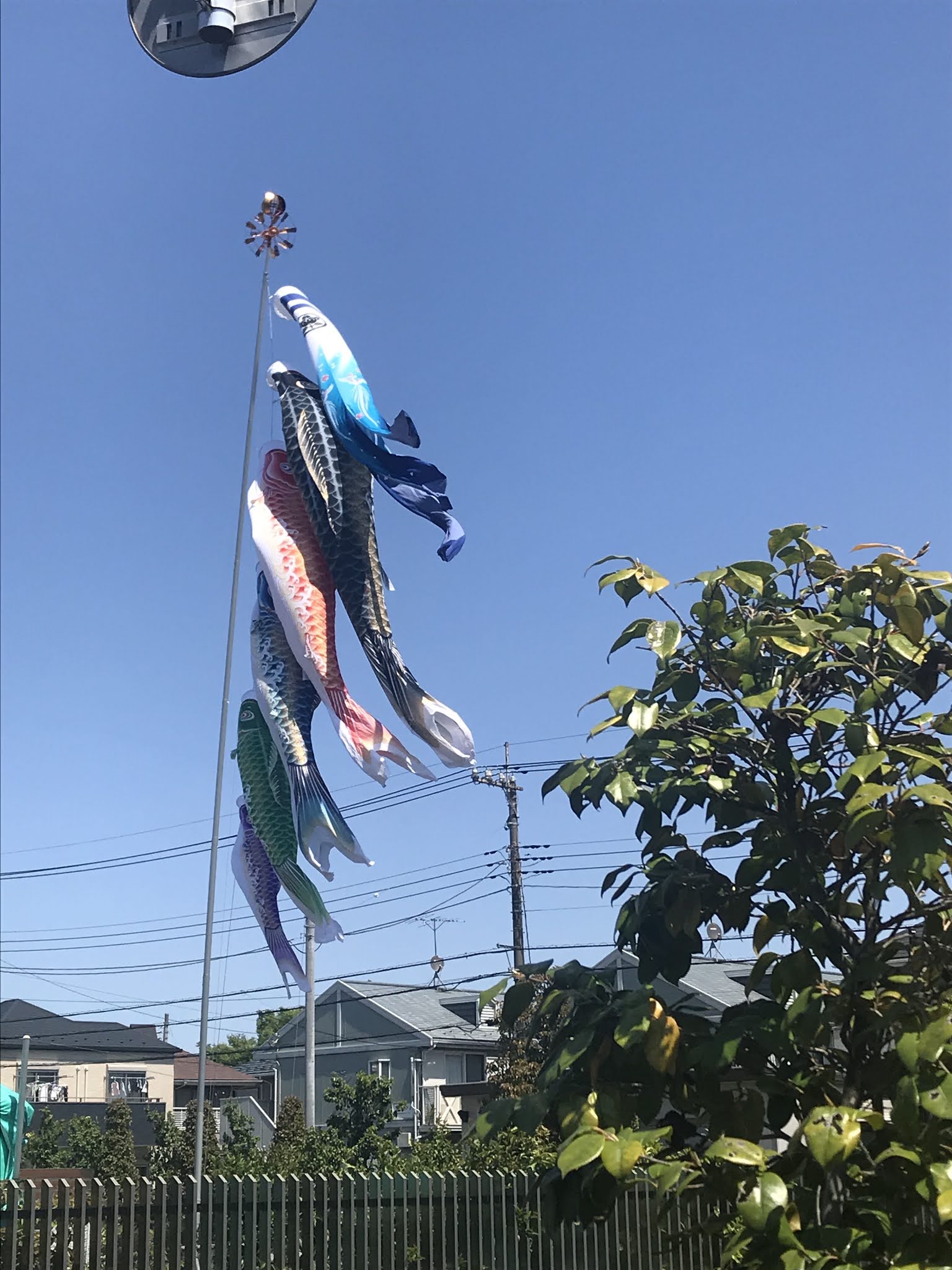
Just outside one of the entrances to the park is a large business/home that flies a set of enormous carp flags at this time of year. It's for a traditional celebration of Children's Day in early May.

Entering the park at this time of year always takes my breath away. We don't live in as much of a concrete jungle as many imagine, but the overwhelming vibrancy of new green leaves as you enter the park gets me every time. Photos don't really capture the experience very well, unfortunately.
This park is full of wonderful mature trees like this.

I read a book for an hour with this view. It was delightfully serene much of the time. Thankfully I was pretty much ready to leave when the grass cutters started up nearby.

A particular attraction at this time in the year is the wisteria. We've got neighbours who have some of this hanging over several metres of their fence, but this is another level higher!


More trees!


On the way home I stopped at a fruit and veg store close to our station and took a road I don't normally travel. I found these radiant Bush lilies, that apparently love the shade (the road is between multi-storey buildings and doesn't get much sun).

This is all a part of a deliberate attempt to not just get exercise and enjoy the beautiful weather but do what Paul exhorted the Philippians to do:
Finally, brothers, whatever is true, whatever is honourable, whatever is just, whatever is pure, whatever is lovely, whatever is commendable, if there is any excellence, if there is anything worthy of praise, think about these things. (ch. 4 vs 8 , ESV).


13 April, 2021

Waiting expectantly

"Be still and know that I am God" is a Bible phrase that's been known to me since I was a child. It's taken on new significance in the past two years.

At the end of 2019 I wrote here:

That verse was given to me on a little card at the spiritual retreat I went to in May. It's a verse I've known since childhood, but only recently have I realised the deeper meaning of it: God is way above my ability to understand him, I need to continually relax my desire to control things and people around me and let God be God. I need to continually remember that worry doesn't help and God actually tells us not to be anxious (Philippians 4:6). I can walk away from my work and leave anything unresolved in God's hand. I can go to sleep at night and leave all my concerns with him.

Then in November last year I wrote here about my frustration at not being able to make plans. In that post I wrote, "Right now, for us, it’s time to wait, and trust in the Lord with all our hearts, leaning not on our own understanding and God will direct our paths (paraphrase from Proverbs 3:5-6)." 

Sadly, things seems even more uncertain now than they did five months ago. Every time we make a longer-range plan, it seems to be dashed.

On Friday this Scripture verse came up on my daily desk calendar:

In the morning, Lord, you hear my voice;
in the morning I lay my requests before you
and wait expectantly. (Ps. 5:3 NIV)

Oh, we've been waiting expectantly, for what feels like a long time! I like that phrase, though, it turns "waiting" into something that's more active. It appears in Luke also (3:15), when the Jews were wondering if John the Baptist was possibly the Messiah. Japanese has a great phrase for this: 待ち望む (machi nozomu) literally "wait" and "hope". In other places the English uses phrases like "wait in hope" (see Ps. 33:20, Isaiah 51:5, and Micah 7:7). Psalm 130:5 puts it even strongly: "my whole being waits, and in his word I put my hope".

And I then this morning I read this article that uses the metaphor of jellyfish and how they go with the sea current. The author writes:

I think at times God just wants us to wait, too. Could we surrender our agenda or our anxiety about the next? Could we stop striving and just “go with Him”? If we could learn to float like jelly and go with His flow, we may just reach the destination in a more peaceful and enjoyable way. 

And she finishes with this prayer:

Father, You are so creative. . . Help us to stop striving and be at peace in the process. Remind us to relax and wait. Help us to not be in a hurry for Your answer but to soak in the time of waiting. Amen.

I know we're not alone at the frustration of this period. Many of us are waiting, and the waiting is wearying. But can we stop our striving? Can we be still and know God at this time? I know it's my daily challenge right now, and probably for some time to come. How about you?

06 April, 2021

Spring 2021 camping trip

It's about time that I got to this post, it's been nearly a week since we got back from our camping trip! We went to another prefecture (Ibaraki) we've never been to before, that makes 21 prefectures out of 47 that we've stayed at least one night in over the last 20 years (we've camped in 16, see my post from last year about our big goal).

This campsite was a complete contrast to last time, in that in October we camped in the middle of the mountains north-west of Tokyo. It was like camping in the middle of a complicated origami piece. This time we camped next to a large lake and not far from the ocean. We had a lot of horizon and almost no mountains. It was our first time in Ibaraki and we were surprised at how flat it was, at least the southern bit that we travelled through. We were also surprised at how easy it was to get there. Just over two hours from our house, most of that distance on expressways. Our campsite in October was closer, as the crow flies, but took about the same time due to weaving in-between mountains. We're far more used to camping on mountains in Japan (after all around 80% of Japan is mountains).

The Japanese tradition at this time of year is to have picnics under sakura (cherry blossom trees) when they are blooming. We went one better: we camped for three nights under one!

Campsites in Japan vary with how structured they are. Many have set spaces that you have to fit within, this one was nicely free of that and it felt like we were in a park. It also meant we could spread out. With ten of us camping, we had three tents and our usual tarp for a living area. We had four adults, and five teens and a pre-teen. This stage of camping with friends of our kids is different and really fun!


We've camped beside several lakes in the last ten years, but never as close as this. I could have thrown a tennis ball from my airbed into the lake (and I don't have a long throw).

Weather makes a big difference to any camping trip. We had quite a variety. After rain most of the first night, the next morning looked like this:


This is a clam fisherman. It was intriguing to watch him work, though he didn't seem to get much for his efforts. This lake, Lake Hinuma, is brackish. Our campsite was only 10km from the sea and the lake is somewhat tidal. Apparently it is a special environment where there are plants and wildlife that aren't so common in other parts of Japan, these clams included.

There were a couple of fearless swans that seemed to be very local. While we were cooking dinner on the second night, our friends got some lovely sunset photos with these swans around the other side of the campsite.

What a great looking kitchen! Cooking dinner: traditional yakisoba (stir-fried pork and noodles). Unfortunately one of these slipped and fell into the dirt just before serving, so we didn't get to eat it all and had to make do with filling up on dessert instead (marshmallows and chocolate banana boats).

We might have missed the sunset (the next day was too cloudy), but we did get a nice moon-rise:

Below are some pretty blossoms next to the tents. There was room to play frisbee and other sports, but this campsite lacked a little in the area of "things to do". We made our own fun, with lots of reading, walking, and riding (two campers brought bikes).

Flowering plum:
Spring starflower:

Daffodil:

Camellia tree just coming to the end of its best season.

Breakfast on the last morning was essentially leftovers. But we didn't do badly at all (we and our camping friends) have a long history of feeding teens, so we weren't found lacking.

The campsite had three main negatives:

1. Camping close to water is beautiful, but can backfire. The wind blew strongly off the lake almost all of our second day. It was like a giant air conditioner, but not in a nice way, because it wasn't warm enough for an air conditioner. Many of us got a lot of reading done in our tents this day. I started and finished a long novel on this trip, I think that's a first (for a short trip like this).

The "rubber ducky" onsen. Literally
dozens of rubber duckies decorated
the common areas of this bath.
2. No shower. Showers seem to be a hard thing to find in reasonably priced campsites close to built-up areas in Japan. The compensation was a trip to a local onsen (hot springs) on the second night. The kids loved it so much they begged to go back on the third night. Three of the adults didn't go again (it was an hour round-trip).

3. Though we'd been told it was okay to camp where we did, a local photographer came before sunrise each morning and set up close to one of our tents, waking some of our campers. Not nice.


One good thing about camping with teens is not having to supervise the kids all the time. On the first full day the four adults went for a walk to a local park. Alas the one who suggested the walk (me) didn't checked if the park was open. It's not uncommon to find attractions shut on a Monday in Japan and this park certainly wasn't open. Not the most scenic of walks, but it was good to stretch our legs. This little roadside garden bed was worth capturing, though.

And a teenager, who will not be named, was climbing in this tree on the first afternoon when a rather large branch broken and deposited him on the ground, about six feet below. Thankfully he'd been imitating a sloth by hanging below the branch, so landed flat on his back, rather than in a more awkward position. Still, it was rather nasty to watch him try to recover his breath. Over a week later he's still suffering some generalised pain, though, so he'll probably see a doctor tomorrow.

The first three months of this year have been very stressful for me—you've probably picked that up if you've read between the lines of my few blog posts. I was frustrated by the wind on our second day at camp, but it did force me to "stay still" and rest, which is probably exactly what I needed. As it turns out,  this is also something of a metaphor for our current situation. David and I have been limited in many ways at the moment (by the pandemic and other personal matters), and in many respects just have to be still and live one day at a time. So I am very grateful for this short getaway, it was a very necessary break in the stress that we've been facing.

We've also decided that three-night camps are a more efficient use of time. It means that we get two whole days of "chilling". We certainly came home from this trip feeling relaxed. I had to get back to work at my desk the day after we returned home (while everyone else in the house was still on holidays), and I can't say that that was very easy, or that I did a good job of it!

So now Spring Break is over for CAJ and we've got only nine weeks left of the school year. We're not sure what camping adventures we'll get up to this summer. We've got ideas . . . but no firm plans. So stay tuned (to get to any new prefectures we'll have to drive a fair bit further, so that might not be on the cards until all our boys have left home).